 Save
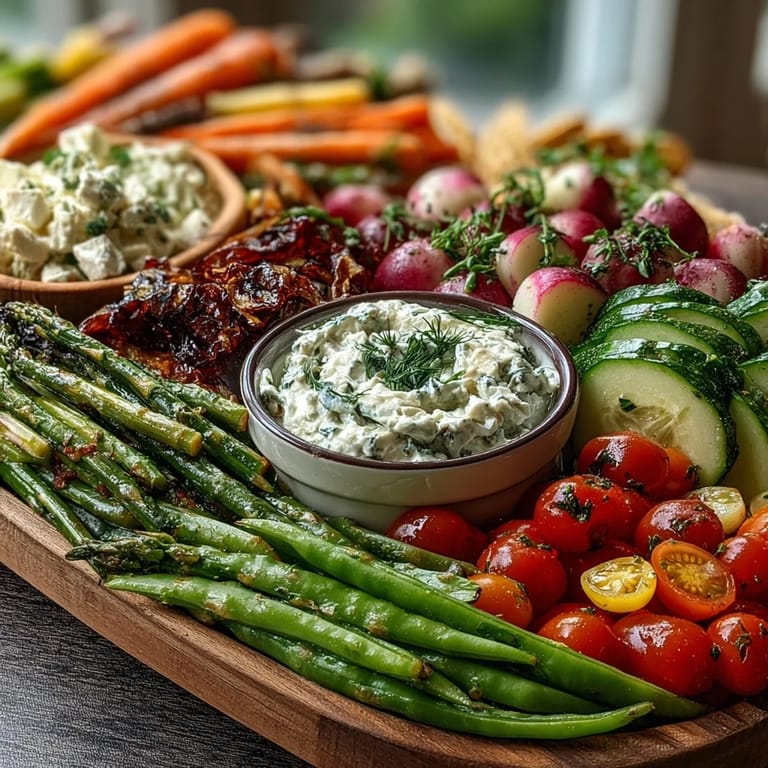
Save Last spring, I found myself standing in the farmers market on a Saturday morning, completely overwhelmed by how much color was suddenly everywhere after months of root vegetables and storage crops. A vendor handed me a bunch of breakfast radishes still dusted with soil, and something clicked—why not build an entire platter around that moment of abundance? That afternoon, I threw together whatever looked fresh and bright, whisked up a dip from herbs I'd been hoarding in the fridge, and ended up with something that felt less like a formal appetizer and more like an edible celebration of the season.
I brought this board to a potluck once where I was genuinely uncertain about my contribution—everyone else seemed to have elaborate casseroles and baked things. But within ten minutes, the vegetables were gone and people were asking about the dip recipe. My neighbor actually pulled me aside later and admitted she'd been eating mostly cheese plates for weeks and had forgotten how good a perfectly ripe pea could taste.
Ingredients
- Breakfast radishes: These thin-skinned spring varieties are peppery and crisp without being aggressively sharp—halve them to show off their color and make them easy to dip.
- Sugar snap peas: Eat them raw and you get this satisfying crunch that disappears the moment you cook them, so resist the urge to blanch these ones.
- Fresh peas: If you can find them shelled, blanch them briefly to set the color and ensure they're tender, but frozen works beautifully too.
- Baby carrots: Buy them whole and small if possible—they photograph better and taste sweeter than the pre-peeled versions.
- Cherry tomatoes: Halve them to expose the juicy center and prevent them from rolling around the board.
- Cucumber: Slice on an angle for more surface area and visual interest.
- Greek yogurt: The base of the dip—use full fat for creaminess and tart flavor that balances the fresh herbs beautifully.
- Mayonnaise: Just two tablespoons adds richness without overpowering the herbs; it's the secret that makes the dip taste more luxurious.
- Fresh lemon juice: Squeeze it just before mixing to keep the brightness alive.
- Chives, parsley, and dill: These three together create the green flavor that makes people ask what's in the dip—use them fresh and finely chopped.
- Garlic: One small clove minced fine so it doesn't overpower, just whispers its presence into the background.
- Microgreens and feta: Optional but worth the small effort—they add texture and another layer of flavor that feels intentional.
Tired of Takeout? 🥡
Get 10 meals you can make faster than delivery arrives. Seriously.
One email. No spam. Unsubscribe anytime.
Instructions
- Wash and prepare your vegetables:
- Run everything under cold water and pat dry—wet vegetables will slip around on the board and look less appetizing. Cut each vegetable into pieces that fit easily in your mouth without requiring a second bite, and do this as close to serving time as possible.
- Arrange your board with intention:
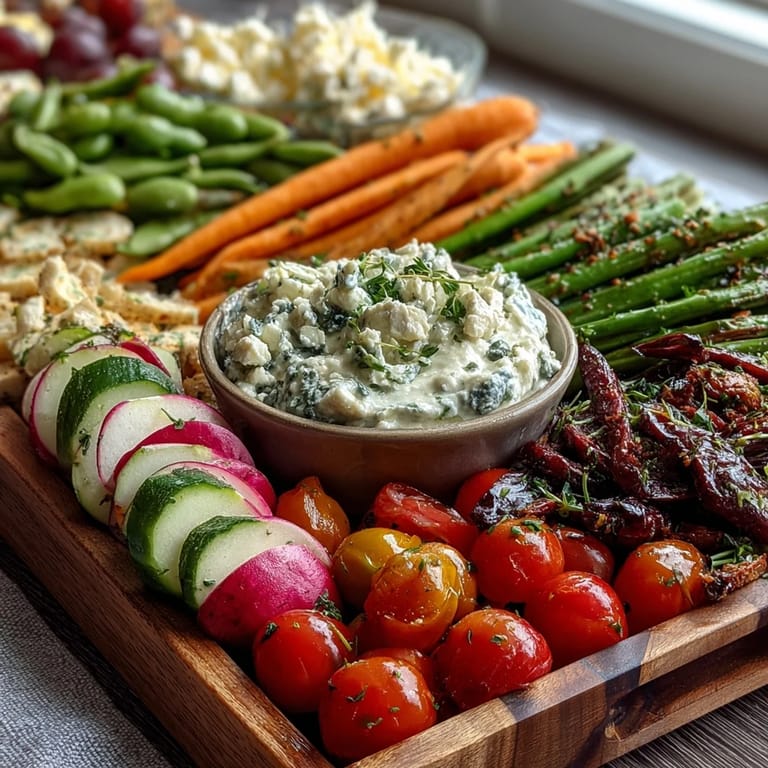
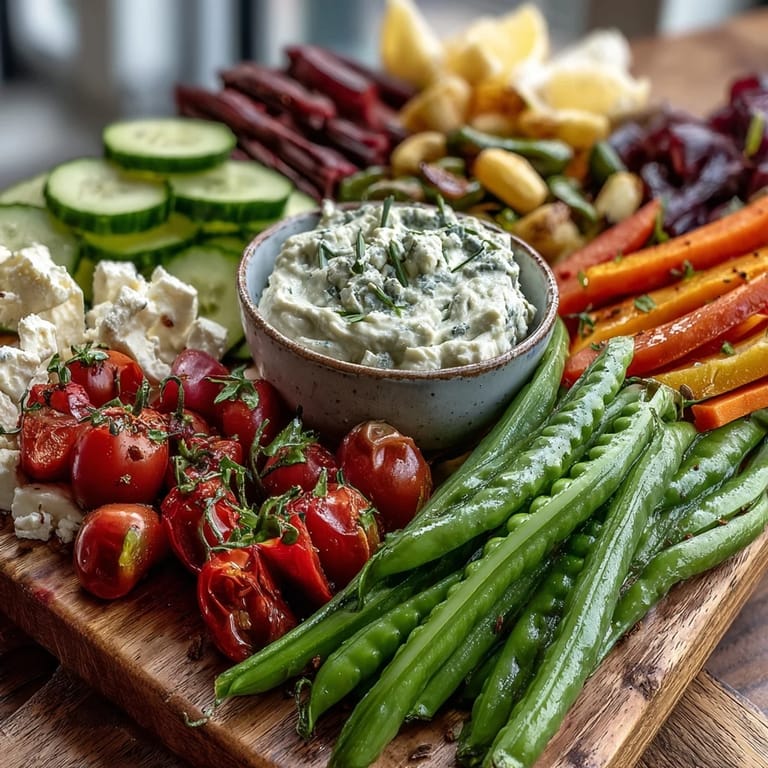
- Place your dip bowl in the center or slightly off center, then arrange vegetables around it in loose groups by color and type. You're not trying to be perfect here—the slightly chaotic abundance is actually what makes it look appealing.
- Make the herb dip:
- Combine yogurt, mayonnaise, and lemon juice in a bowl, then fold in your chopped herbs and minced garlic until the dip looks flecked with green and smells like a garden. Taste it and adjust salt and pepper—this is where you get to season to your preference.
- Transfer and garnish:
- Scoop the dip into a small serving bowl and nestle it into your board arrangement. Scatter microgreens and feta over any bare spots if you're using them, then step back and look at what you've created.
- Serve with confidence:
- Bring it to the table immediately while everything is cold and crisp, and watch people's faces light up when they see it.
 Save
Save My friend brought this board to her daughter's school event, and I found out later that it became the thing everyone talked about—apparently the kids devoured the peas like they were candy and discovered they actually liked vegetables. She told me afterward that her daughter had asked for sugar snaps at the grocery store, which is not something that had ever happened before.
Why This Board Works for Every Season
Spring vegetables are the obvious choice and the most exciting, but this concept travels really well through the year. In summer, add blanched asparagus and grilled corn; in fall, roasted beets and crispy apple slices; in winter, blanched broccoli and cauliflower florets. The dip never needs to change, which means you're building on something reliable while keeping the visual story fresh and current.
The Magic of Arrangement
I used to think vegetable boards needed to follow some design principle, but I've learned that the real trick is just distributing your colors and shapes so nothing repeats too close together. Group radishes with cherry tomatoes, separate the green vegetables from each other, and let the eye travel around the board. You want someone to see this and think about the garden, not about a puzzle you've solved.
Making It Unforgettable
The difference between a good vegetable board and one that people actually remember comes down to two things: the quality of what you buy and the generosity of how you make the dip. Don't skimp on the herbs, don't overthink the arrangement, and trust that fresh food arranged with care is inherently beautiful. This is food that tastes like you care about the people eating it, and that flavor comes through in every bite.
- Taste the dip before serving and adjust the lemon juice and salt until it makes you happy—this is your baseline for seasoning.
- If you're making this ahead, assemble the vegetables on the board no more than an hour before serving so they stay crisp.
- Serve the board with small plates and small spoons so people can eat without chaos or mess.
 Save
Save This board is spring in edible form, a reminder that sometimes the best cooking requires no actual cooking, just an eye for color and a moment of generosity. Serve it and feel the room shift.
Recipe Questions & Answers
- → What vegetables are best for a spring board?
Fresh, crisp vegetables like radishes, sugar snap peas, baby carrots, cherry tomatoes, and cucumbers work wonderfully for a spring board, offering a variety of textures and flavors.
- → How is the herb dip prepared?
The dip combines creamy Greek yogurt with mayonnaise, fresh lemon juice, chopped chives, parsley, dill, garlic, salt, and pepper, mixed until smooth for a refreshing accompaniment.
- → Can this board be made ahead of time?
The herb dip can be prepared and refrigerated up to two days in advance, while vegetables are best arranged just before serving to maintain freshness.
- → Are there any suitable garnishes to enhance the platter?
Optional garnishes include microgreens and crumbled feta cheese, adding extra color and flavor contrasts to the board.
- → Is this spring board suitable for various diets?
This board is vegetarian and gluten-free when crackers or bread are omitted or substituted with gluten-free options, making it suitable for multiple dietary preferences.