 Save
Save Last October, I was standing in my kitchen on one of those crisp mornings when the air smells like woodsmoke and decay, and I realized I'd bought far too much butternut squash at the farmers market. My hands still smelled like earth from unpacking the haul, and instead of feeling frustrated, I got curious about making something warm. That's when I remembered my grandmother's minestrone, but with a seasonal twist—ditching the summer vegetables for autumn ones. This soup became my answer to that impulse, and now it's what I make whenever the leaves start turning.
I made this for my friend Marcus on a Saturday afternoon when he was going through a rough patch, and watching him take that first spoonful—and then immediately take another—said everything. He asked what was in it with this surprised look, like he couldn't believe something so comforting could come from his kitchen too. That's the power of this soup; it feels like it's giving you a hug while you're eating it.
Ingredients
- Pancetta, diced (120 g): This is the flavor foundation—it renders down and seasons everything around it, so don't skip it or swap it for bacon unless you're going vegetarian.
- Olive oil (1 tbsp): Just enough to get things going before the pancetta releases its own fat.
- Yellow onion, diced (1 medium): The aromatic backbone that makes people ask what smells so good before they even sit down.
- Carrots and celery, diced (2 medium and 2 stalks): This is your soffritto base—dice them roughly the same size so everything cooks evenly.
- Butternut squash, peeled and cubed (2 cups): The star of fall; its sweetness balances the savory pancetta and adds body to the broth.
- Garlic cloves, minced (2): Add this after the squash so it doesn't burn while everything else is softening.
- Kale, stems removed and chopped (2 cups): Added near the end so it stays vibrant and just slightly tender, not disintegrated.
- Diced tomatoes with juice (1 can, 400 g): Canned tomatoes are actually perfect here—they've been cooked already and blend seamlessly into broth.
- White beans, drained and rinsed (1 can, 400 g): Cannellini or Great Northern both work beautifully; rinsing them removes excess starch so the broth stays clear.
- Ditalini pasta (1 cup, 120 g): Small tube pasta that catches the broth and doesn't overpower the vegetables—it finishes cooking in the soup itself.
- Chicken or vegetable broth (1.2 liters): Use something you'd actually taste on its own; mediocre broth makes mediocre soup.
- Fresh thyme, bay leaf, black pepper, and salt: Thyme brings an herbaceous warmth that screams autumn, while the bay leaf deepens everything underneath.
- Fresh parsley and Parmesan, for serving: These finish the bowl with brightness and richness—don't skip them even if you think you're in a hurry.
Tired of Takeout? 🥡
Get 10 meals you can make faster than delivery arrives. Seriously.
One email. No spam. Unsubscribe anytime.
Instructions
- Render the pancetta:
- Heat olive oil in your large pot over medium heat, then add the diced pancetta. Let it sizzle and crisp up for about 5 minutes, listening for that gentle sound that tells you it's getting there—the smell alone will make you feel like a real cook. Scoop it out with a slotted spoon and set it aside on a paper towel, leaving every bit of that golden fat behind in the pot.
- Build your aromatic base:
- Toss in the diced onion, carrots, and celery into that warm pancetta fat and let them soften for about 5 minutes, stirring occasionally. You're listening for the sizzle to become quieter, watching the edges of the vegetables turn just slightly golden—that's your signal you're ready for the next step.
- Wake up the squash:
- Add your cubed butternut squash and minced garlic, stirring everything together and cooking for just 2 minutes until the whole pot smells like autumn in a bowl. The garlic should just barely start to turn golden at the edges—this is where the magic of flavor-building happens.
- Build the broth:
- Pour in your diced tomatoes (juice and all), add the drained beans, broth, thyme, bay leaf, salt, and pepper. Bring everything to a gentle simmer—you want a slow, thoughtful bubble, not an aggressive rolling boil that will break apart your squash.
- Let the squash surrender:
- Cover the pot and let it simmer for 20 minutes until the butternut squash is completely tender and starting to fall apart slightly at the edges. You can poke a piece with a fork and it should collapse immediately—that's how you know it's ready for the next step.
- Finish with greens and pasta:
- Add the kale and pasta:
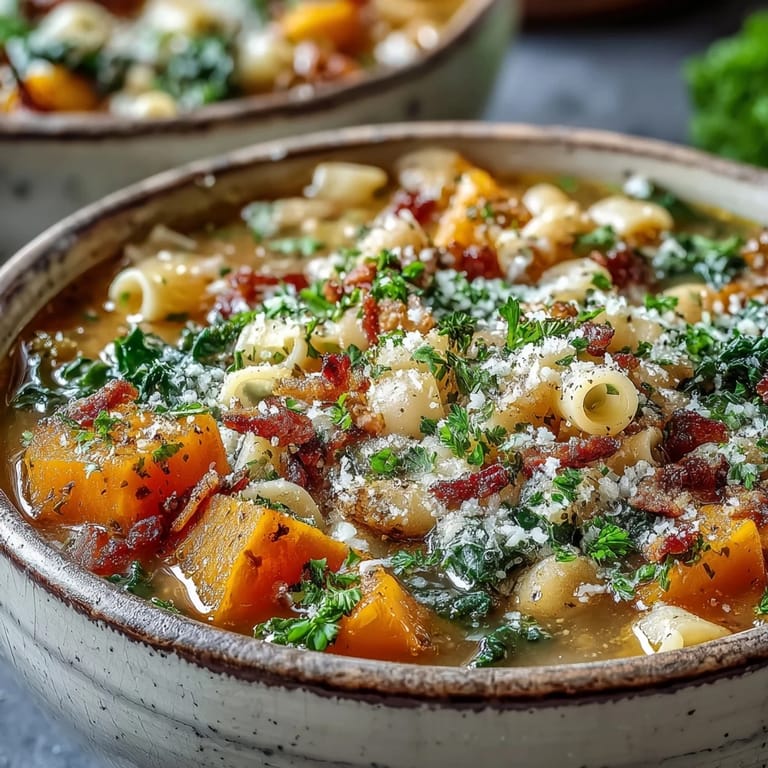
- Stir in your chopped kale and the ditalini pasta, then simmer uncovered for 8 to 10 minutes until the pasta is just shy of al dente and the kale is wilted down to bright green ribbons. The pot gets quiet again as the pasta absorbs the broth, and suddenly you have something that looks and tastes like pure comfort.
- Taste and adjust:
- Fish out the bay leaf, then taste a spoonful—really taste it. Add more salt or pepper if it needs it; this is your moment to make it exactly how you like it, not how a recipe tells you it should be.
- Serve with ceremony:
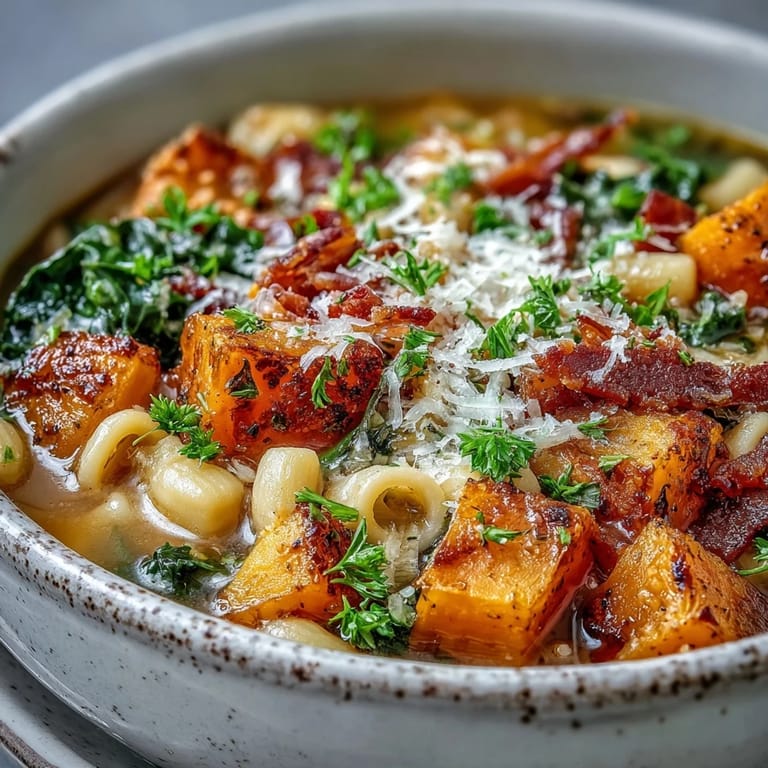
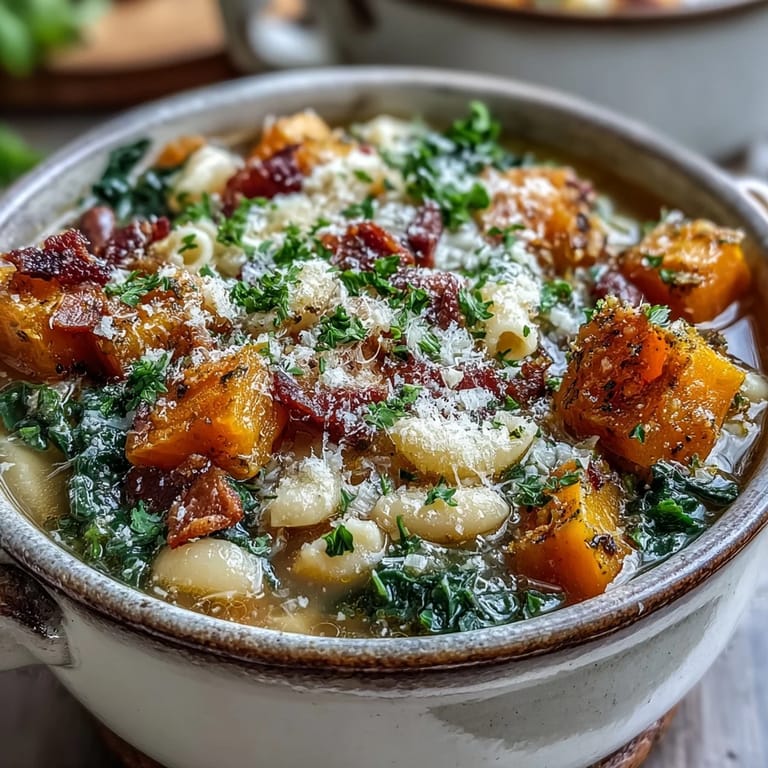
- Ladle the soup into bowls, top each one with some of those crispy pancetta bits, a scatter of fresh parsley, and a generous amount of freshly grated Parmesan cheese. Watch someone's face when they taste it—that moment is worth every step.
 Save
Save  Save
Save I served this to my in-laws for the first time and my mother-in-law asked for the recipe before she'd even finished her bowl—that's when I knew I'd nailed something special. There's something about a soup that makes people feel cared for, that turns an ordinary Tuesday night into something that feels almost ceremonial.
The Pancetta Question
Some people ask if they can skip the pancetta, and the answer is technically yes but honestly no—the rendered pork fat is what makes this soup sing instead of just whisper. If you're vegetarian, omit it completely and use vegetable broth, then add a pinch of smoked paprika right after the garlic hits the pot. That paprika trick—I learned it by accident when I opened the wrong cabinet thinking it was cumin—gives you back some of the savory depth that pancetta would've provided, and nobody at the table will feel like they're eating the lesser version.
Timing and Texture
This soup comes together in stages, and each stage has a different pace—some fast and furious, some slow and meditative. The pancetta crisps quickly, the vegetables soften gently, and the squash needs time to surrender to the heat without breaking apart. Once you add the pasta and kale at the end, suddenly everything accelerates again and you're done before you realize it's happening. The total time is genuinely an hour from cold stove to sitting down with a full bowl, which means this is a weeknight soup, not a weekend project.
Variations and Flexibility
I've made this a hundred different ways depending on what was in my crisper drawer and what the season demanded, and it's been excellent almost every time. Swap the pasta for more beans if you're gluten-free, or use rice instead if you want something heartier. You could add rosemary instead of thyme, or throw in some spinach alongside the kale if you're feeling generous. The beauty of minestrone is that it's flexible enough to bend to your needs without losing its essential character—that warm, welcoming, deeply satisfying quality that makes people come back for seconds.
- Any small pasta shape works here, so use whatever you have—orzo, small shells, or even broken spaghetti all work beautifully.
- You can absolutely make this ahead and store it in the refrigerator for up to 4 days, which somehow makes it taste even better the next day.
- If you're meal prepping, keep the pasta separate and add it fresh when you reheat, so it doesn't get mushy sitting in the broth.
 Save
Save  Save
Save This soup has become my answer to almost any season, any mood, any reason to gather people around a table. It's the kind of dish that reminds you why cooking for others matters so much.
Recipe Questions & Answers
- → Can I make this soup vegetarian?
Yes, simply omit the pancetta and use vegetable broth instead of chicken broth. Add a pinch of smoked paprika to replicate some of the smoky depth that pancetta provides.
- → What pasta shapes work best in minestrone?
Ditalini is traditional, but any small pasta shape works well including elbow macaroni, small shells, or orzo. Just adjust cooking time according to the package instructions for your chosen pasta.
- → How do I store leftover minestrone?
Store in an airtight container in the refrigerator for up to 4 days. Note that the pasta will absorb liquid over time, so you may need to add extra broth when reheating.
- → Can I freeze this soup?
Yes, though pasta can become mushy when frozen. For best results, prepare the soup without pasta, freeze, then add freshly cooked pasta when reheating.
- → What can I substitute for butternut squash?
Sweet potato, pumpkin, or acorn squash work beautifully as alternatives. Cut them into similar-sized cubes to ensure even cooking.
- → How can I make this gluten-free?
Use certified gluten-free pasta or omit the pasta entirely and add an extra can of white beans for heartiness. The soup will still be delicious and satisfying.