 Save
Save There's something about a tuna casserole that stops time in the kitchen. My mom used to make this on Thursday nights when she knew the week had worn us all down, and it was always ready by the time my dad got home from work. The smell alone—that buttery, cheesy warmth spreading through the house—felt like a permission slip to relax. I didn't appreciate it then, but now I make it whenever I need comfort food that actually comforts, not just feeds.
I made this for my roommate once when she was having a rough semester, and she actually cried a little when she tasted it—not because it was fancy, but because it was exactly what she needed. That's when I understood this dish isn't about impressing anyone. It's about saying, through food, that you care enough to feed someone properly.
Ingredients
- Egg noodles or fusilli, 250 g: The shape matters more than you'd think; noodles catch the sauce in their curves and crevices, making each bite creamy rather than oily.
- Frozen peas, 1 cup: Buy good quality frozen peas, not the dusty ones that've been in the back of the freezer for two years—they should be bright green and pop between your teeth.
- Onion, 1 small, finely chopped: Don't skip this; it dissolves into the sauce and becomes the quiet backbone of flavor.
- Garlic, 2 cloves, minced: Fresh garlic is non-negotiable here—it wakes up everything else.
- Tuna in water, 2 cans (170 g each), drained: Drain it well, pressing gently with the back of a spoon to remove excess liquid without crushing the flakes.
- Unsalted butter, 2 tablespoons: Use real butter; it's only two tablespoons, so make them count.
- All-purpose flour, 2 tablespoons: This is your thickener—whisk it in smoothly to avoid lumps.
- Milk, 1.5 cups: Whole milk makes the sauce richer, but 2% works if that's what you have.
- Sour cream, 0.5 cup: This adds tang and richness; don't substitute it with something lighter unless you're okay with a thinner sauce.
- Salt, 0.5 teaspoon: Taste as you go; you might need a touch more depending on your canned tuna.
- Black pepper, 0.25 teaspoon: Freshly ground pepper tastes infinitely better than the pre-ground stuff.
- Dried thyme, 0.5 teaspoon (optional): It's optional, but thyme feels like it belongs here—herbaceous and subtle.
- Shredded cheddar cheese, 0.5 cup: Use sharp cheddar if you can; it has more personality than mild.
- Panko breadcrumbs, 1 cup: Panko gives you that shattering crunch, not the sad density of regular breadcrumbs.
- Unsalted butter, melted, 2 tablespoons: This makes the topping golden and crunchy, not pale and sad.
- Grated Parmesan cheese, 2 tablespoons: Freshly grated makes a real difference; the pre-grated stuff is coated with anti-caking agents that feel grainy.
Tired of Takeout? 🥡
Get 10 meals you can make faster than delivery arrives. Seriously.
One email. No spam. Unsubscribe anytime.
Instructions
- Heat your oven and prepare:
- Preheat to 190°C (375°F) and grease your baking dish generously so nothing sticks. This matters more than you'd think.
- Cook the pasta right:
- Boil it in salted water until just al dente—soft enough to eat but still with a little resistance. Overcooked pasta will turn mushy once it bakes, and nobody wants that.
- Make the sauce foundation:
- Melt butter over medium heat, then sauté your onion and garlic until they're soft and fragrant—you're building flavor, not browning anything. Sprinkle in the flour and stir constantly for a minute; this cooks out the raw flour taste.
- Build the sauce:
- Whisk in milk slowly, stirring constantly to avoid lumps, then let it bubble gently until it thickens enough to coat the back of a spoon. This takes about 3-4 minutes and you'll know it's ready when you run your finger across the spoon and the line holds.
- Season and finish the sauce:
- Pull it off heat and stir in sour cream, salt, pepper, thyme if you're using it, and cheddar cheese. The sauce should taste a little more seasoned than you'd eat on its own—it mellows once everything comes together.
- Combine everything gently:
- Fold in the tuna, peas, and pasta with a rubber spatula, mixing until every noodle is coated but trying not to break the tuna apart into tiny bits. Broken tuna tastes fine but looks less appetizing.
- Into the dish:
- Spoon the mixture into your prepared baking dish, spreading it roughly even. It doesn't need to be perfect.
- Make the crispy topping:
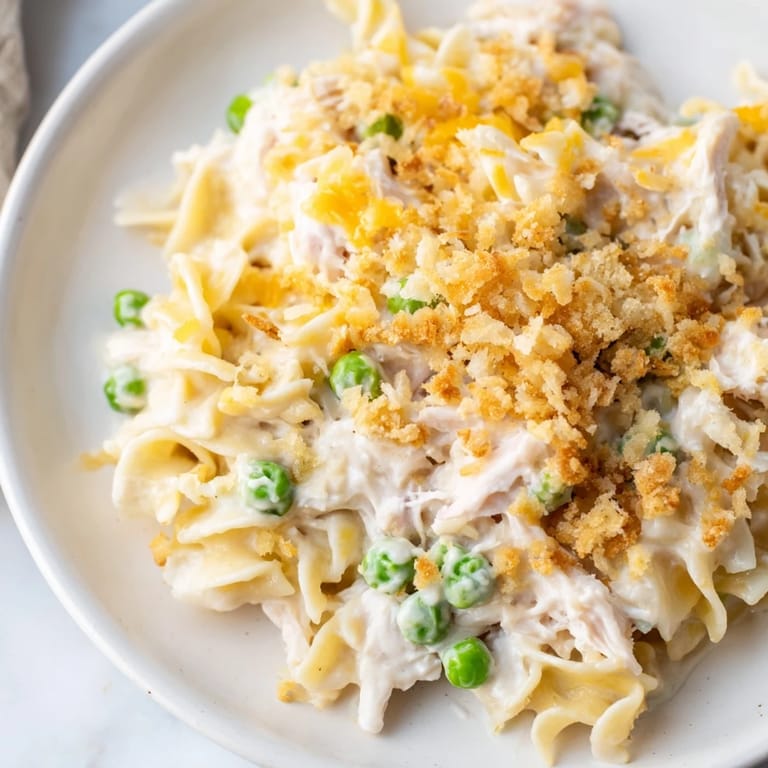
- Mix panko, melted butter, and Parmesan in a small bowl, then sprinkle it evenly over the casserole. This is what you're biting into first, so don't skimp.
- Bake until golden:
- Bake uncovered for 20-25 minutes until the edges are bubbling and the top is golden brown. If your topping isn't browning after 20 minutes, bump the oven temp up 10 degrees and check again in 3 minutes.
- Let it rest:
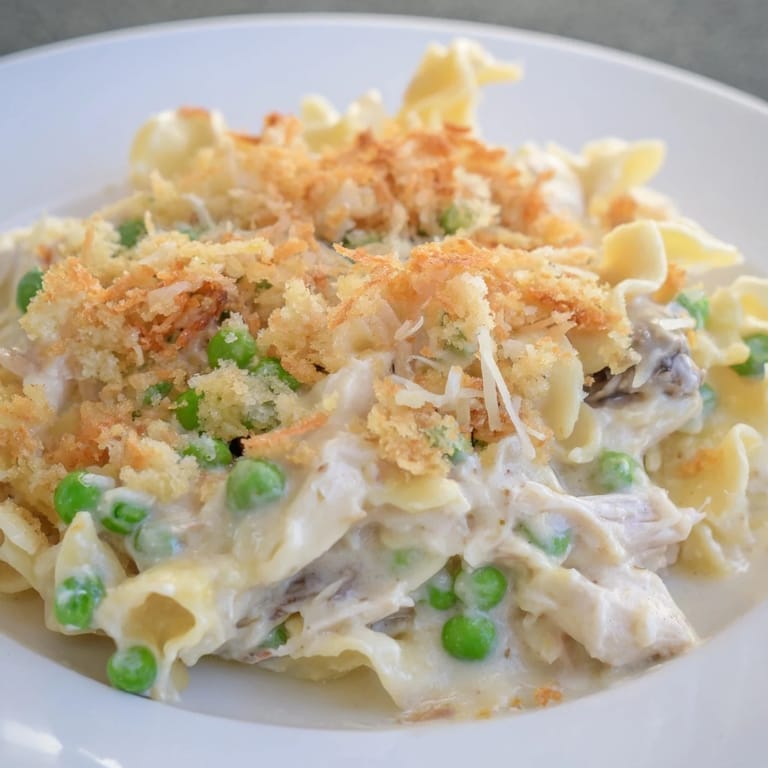
- Cool for 5 minutes before serving—this lets everything set up slightly so you get clean spoonfuls instead of soup.
 Save
Save I once forgot to drain the tuna properly and spent the next thirty minutes wondering why my beautiful sauce had turned into tuna-flavored soup. It taught me that these small, unglamorous steps are where the magic actually lives.
Why This Tastes Like Comfort
Tuna casserole works because it hits every comfort food button at once: creamy sauce, protein, texture contrast, something that tastes nostalgic even if you've never had it before. It's also forgiving in a way that fancy cooking isn't—slightly overcooked? Still delicious. Forgot the thyme? Nobody notices. This is food made for actual humans, not food made to impress.
Ways to Make It Your Own
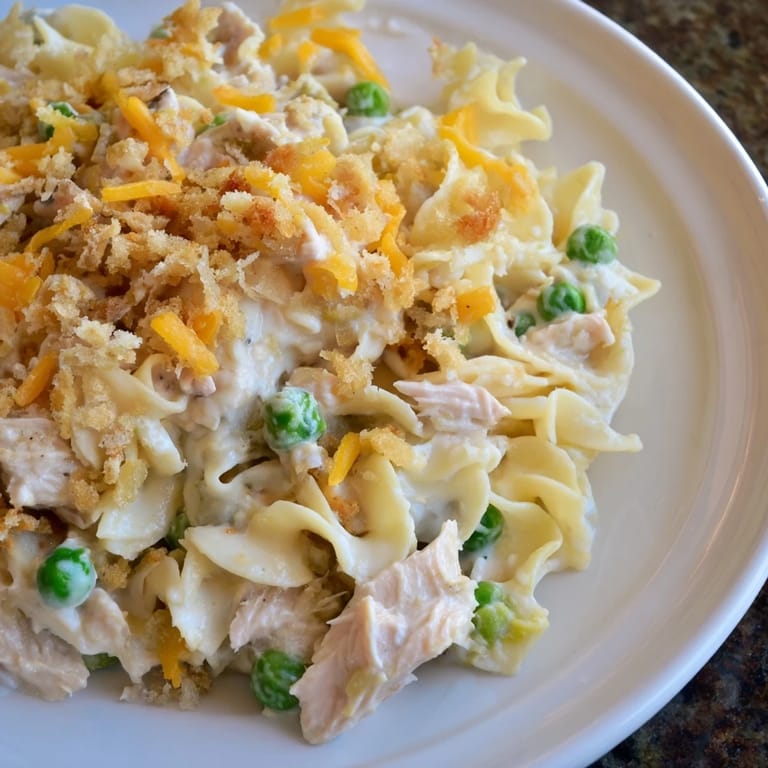
Once you've made this a few times, you'll start seeing possibilities. Some people swear by adding sautéed mushrooms for earthiness, or swapping cheddar for Swiss cheese if they want something milder and nuttier. You can stir in crispy bacon bits, swap the peas for frozen broccoli, or add a handful of diced bell peppers sautéed with the onion. The structure is so solid that you can play within it without everything falling apart.
What to Serve Alongside
A crisp green salad with a sharp vinaigrette cuts through the richness beautifully—think arugula with lemon dressing, or romaine with a simple vinegar and oil. If you're feeling like a drink, a chilled Sauvignon Blanc or even a cold beer works. The casserole is rich and warm, so you want something cool and bright to balance it.
- Make the salad while the casserole bakes so everything's ready at once.
- Greek yogurt can replace sour cream if that's what you have, though the sauce will be slightly less tangy.
- Leftovers reheat beautifully in a 160°C oven covered with foil for about fifteen minutes.
 Save
Save This is the kind of recipe you make when you want to feed people and have them feel taken care of. That's all it needs to be.
Recipe Questions & Answers
- → What pasta works best for this dish?
Egg noodles or fusilli are ideal because they hold the creamy sauce well and provide a tender yet firm texture after baking.
- → Can I substitute the peas with other vegetables?
Yes, vegetables like sautéed mushrooms, broccoli, or green beans can complement the flavors and add variety to the dish.
- → How do I achieve a crispy topping?
Combine panko breadcrumbs with melted butter and Parmesan cheese, then sprinkle evenly on top before baking to get that golden, crunchy finish.
- → Is it possible to use a different cheese?
Cheddar provides a sharp flavor, but Swiss or mozzarella can be used depending on your preference for a milder or stretchier texture.
- → Can this dish be prepared ahead of time?
Yes, you can assemble it and refrigerate before baking. Just add a few extra minutes to the baking time if chilled.