 Save
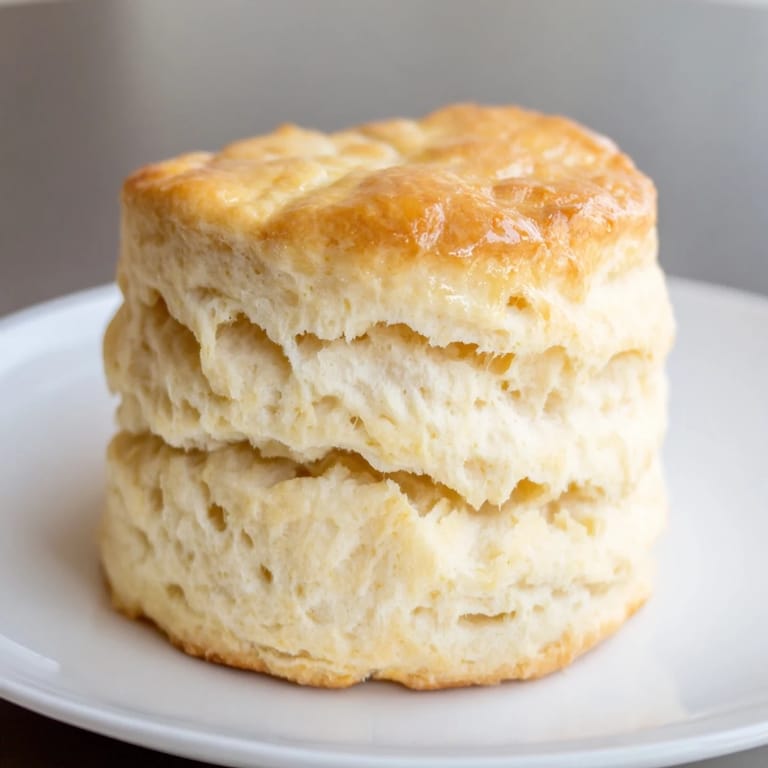
Save My grandmother kept a cast-iron skillet on her stove for fifty years, but her real magic was in the biscuits. I watched her pull them from the oven one Sunday morning, steam rising in perfect little clouds, and asked what made hers so different from mine. She smiled and said it was all about cold butter and knowing when to stop mixing. That lesson stuck with me, and now these buttermilk biscuits are the first thing I reach for when I want to feel that same warmth she created in her kitchen.
Years ago, I brought these to a potluck thinking no one would notice them among all the elaborate dishes. A friend grabbed four in quick succession, then came back asking for the recipe before I'd even sat down. Watching people slow down mid-conversation to enjoy something so simple reminded me that good food doesn't need to be complicated to matter.
Ingredients
- All-purpose flour (2 cups): The foundation that gives you that tender crumb; make sure it's not packed down in the measuring cup.
- Baking powder (1 tablespoon): This is what gives the biscuits their lift, so check that your container is fresh and sealed tight.
- Baking soda (½ teaspoon): Works with the buttermilk to create that perfect rise without a heavy, dense feel.
- Fine sea salt (1 teaspoon): Enhances everything without making the biscuits taste salty; it's about balance.
- Granulated sugar (1 tablespoon): Just enough to hint at sweetness and help the tops brown beautifully in the oven.
- Cold unsalted butter (½ cup, cubed): The star ingredient that creates those flaky layers; it needs to stay cold or the magic disappears.
- Cold buttermilk (¾ cup, plus extra for brushing): The acid reacts with the baking soda and keeps everything tender; straight from the refrigerator is non-negotiable.
Tired of Takeout? 🥡
Get 10 meals you can make faster than delivery arrives. Seriously.
One email. No spam. Unsubscribe anytime.
Instructions
- Get your oven ready and prep your workspace:
- Heat your oven to 220°C (425°F) and line a baking sheet with parchment paper. You want everything prepared before you touch the dough because once you start, you'll want to work quickly.
- Combine the dry ingredients:
- Whisk together the flour, baking powder, baking soda, salt, and sugar in a large bowl. This mixes everything evenly so you get consistent rise throughout each biscuit.
- Cut in the cold butter:
- Add the cubed butter and use a pastry cutter, fork, or your fingertips to break it into the flour until it looks like coarse breadcrumbs with some pea-sized pieces still visible. The larger butter pieces are what create those gorgeous flaky layers.
- Bring the dough together gently:
- Make a well in the center, pour in the cold buttermilk, and stir with a fork just until the dough comes together. Stop the moment everything is combined; overmixing develops gluten and makes them tough instead of tender.
- Fold for flakiness:
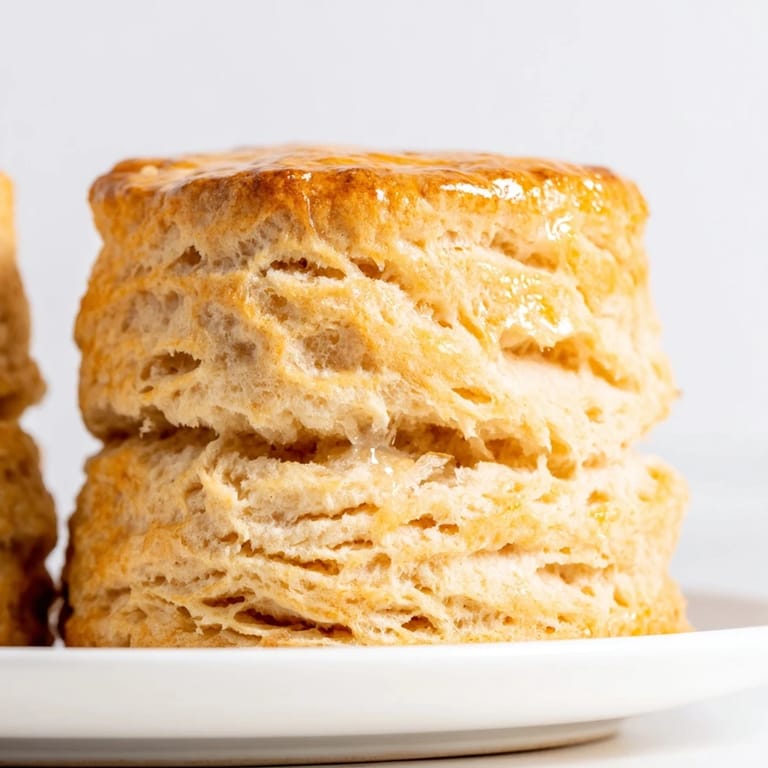
- Turn the dough onto a lightly floured surface and pat it into a rectangle about 1.5 cm thick. Fold it in half, pat it out again, and repeat two more times. This folding creates those distinct layers that make people ask for your recipe.
- Shape and cut:
- Pat the dough to a final thickness of 2.5 cm (1 inch) and cut out biscuits with a 6 cm round cutter, pressing straight down without twisting. Gather the scraps gently and cut more biscuits until you've used all the dough.
- Prepare for baking:
- Arrange the biscuits close together on your prepared baking sheet and brush the tops lightly with buttermilk. This creates that beautiful golden-brown finish.
- Bake until golden:
- Bake for 13 to 15 minutes, watching for them to turn tall and deep golden brown. The moment they're done, pull them out and let them cool for a few minutes before serving warm.
 Save
Save I once made these for a friend's family dinner when she was going through a rough time, and watching everyone at the table pause and smile with that first bite felt like the most honest thing I could offer. Food becomes memory, and these biscuits somehow hold space for joy even when everything else feels uncertain.
Making Them Your Own
The beauty of these biscuits is that they're a blank canvas for your creativity. A friend of mine shreds sharp cheddar and mixes it into the dry ingredients, and they vanish from the plate before anything else. Another keeps fresh herbs like chives or thyme on hand and adds a generous handful, transforming them into something savory and sophisticated. Even a simple grind of black pepper changes the entire mood of the biscuit.
Serving Ideas That Work
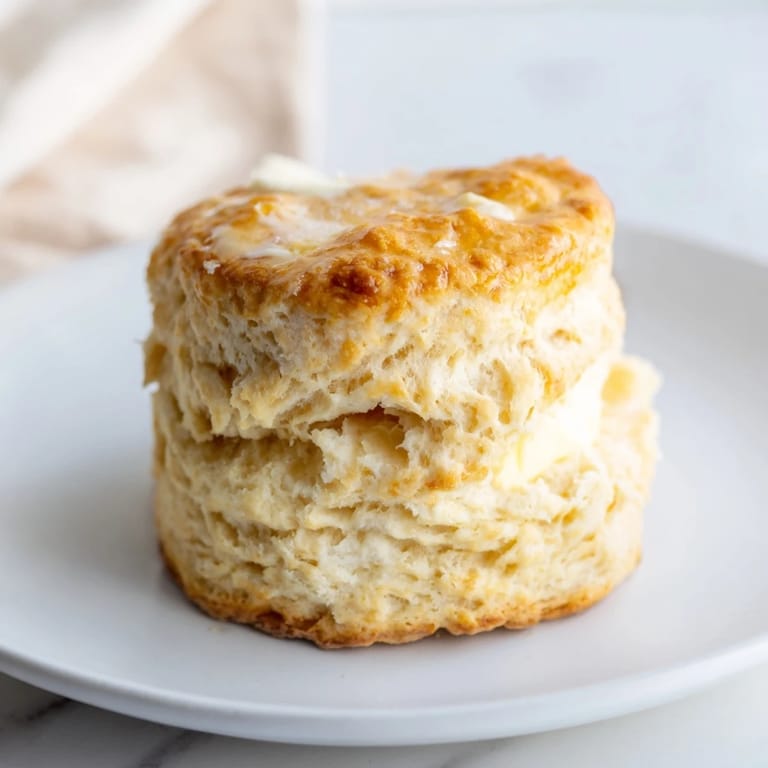
Warm biscuits with honey and butter is the obvious play, but there's so much more to explore. I've seen them crumbled into soups, split and filled with fried chicken and hot sauce, or simply torn apart and layered with jam and whipped cream. The versatility is part of what makes them such a staple in my kitchen; they show up differently depending on what the meal needs.
Troubleshooting and Storage
Biscuits that don't rise usually mean your baking powder has lost its power or you've overworked the dough. Dense, heavy biscuits often come from warm ingredients or mixing too much. If you don't have buttermilk, mix regular milk with lemon juice or vinegar and let it sit for five minutes before using.
- Store cooled biscuits in an airtight container at room temperature for up to two days, or freeze them for up to three months.
- Reheat in a 180°C oven for about five minutes to bring back that fresh-from-the-oven texture.
- Make the dough ahead and refrigerate it for up to twelve hours, then cut and bake whenever you're ready.
 Save
Save These biscuits have become my answer to almost any occasion, from quiet breakfast mornings to tables full of people I love. They remind me that the simplest things, made with care and attention, are often exactly what we need.
Recipe Questions & Answers
- → What gives biscuits their flaky texture?
Cold butter folded into the dough creates layers that puff and separate during baking, resulting in a flaky texture.
- → Can I substitute buttermilk in this preparation?
Yes, mix milk with lemon juice or vinegar and let it sit for 5 minutes to mimic buttermilk's acidity and create a tender crumb.
- → Why is it important not to overmix the dough?
Overmixing develops gluten and can make biscuits tough; gentle mixing keeps them tender and flaky.
- → How does folding the dough affect the final biscuits?
Folding creates multiple layers, boosting flakiness and giving the biscuits height and a delicate crumb.
- → What is the purpose of brushing the biscuits with buttermilk before baking?
Brushing adds moisture and promotes a golden, slightly crisp finish on the biscuit tops.