 Save
Save There's something about shepherd's pie that stops time in a kitchen. My neighbor brought a golden-topped casserole to our door during a winter that felt particularly long, and I watched my family vanish it in minutes—even my picky eater asked for seconds. That night I understood why this dish has survived centuries: it's not fancy, it's not complicated, but it tastes like someone cares enough to layer comfort onto a plate.
I made this for my partner on a rainy Tuesday when we'd had the kind of day that needed fixing, and I learned something unexpected: the smell alone—the beef browning, the herbs unfurling—was half the therapy. By the time it came out of the oven, we'd already set the table twice because we couldn't wait.
Ingredients
- Ground beef or lamb: Beef is forgiving and reliable, but lamb brings something deeper and more interesting if you're feeling adventurous.
- Onion and garlic: The foundation that makes everything taste like it's been simmering for hours, even though it hasn't.
- Carrots: They soften into the filling and add sweetness that balances the savory meat.
- Frozen peas and corn: Don't apologize for using frozen; they're picked at peak ripeness and stay tender instead of turning to mush.
- Tomato paste: This concentrate is your secret weapon—it adds depth and richness without thinning the filling.
- Worcestershire sauce: A small amount goes a long way toward making people ask 'what is that flavor?'
- Thyme and rosemary: Dried herbs work beautifully here because the long cooking releases their oils.
- Beef or chicken broth: Homemade is lovely but store-bought works just fine; the important thing is seasoning it well.
- All-purpose flour: This thickens the filling naturally so it doesn't turn soupy under the potatoes.
- Russet potatoes: Their starch makes them whip up into clouds; waxy potatoes will stay gluey no matter how hard you try.
- Butter and milk: Cold butter and warm milk together create mashed potatoes that are creamy without being gluey.
- Cheddar cheese: Optional but it adds a sharp note that cuts through the richness perfectly.
Tired of Takeout? 🥡
Get 10 meals you can make faster than delivery arrives. Seriously.
One email. No spam. Unsubscribe anytime.
Instructions
- Start the potatoes:
- Fill a large pot with salted water and bring it to a rolling boil—this is important because the salt seasons the potatoes as they cook. Cut your russets into rough chunks, drop them in, and set a timer. You're looking for fork-tender, about 15 to 20 minutes depending on how big your pieces are.
- Build the filling foundation:
- While potatoes are going, heat olive oil in your largest skillet over medium-high heat. The oil should shimmer and almost smoke; that's when you know it's hot enough. Throw in your chopped onion and carrots and listen for that sizzle—it means browning is starting, and browning means flavor.
- Add the aromatics:
- After the vegetables soften and the onion turns translucent (about 3 to 4 minutes), add your minced garlic and stir constantly for just one minute. Garlic burns fast, and burnt garlic tastes bitter and wrong, so don't step away.
- Brown the meat:
- Push the vegetables to the side and crumble the ground beef or lamb into the open space, letting it sit for a minute before stirring. This initial contact with the hot pan creates those flavorful browned bits called fond. Break it up with a wooden spoon, stirring occasionally, until it's no longer pink and the fat starts to render—about 5 to 7 minutes.
- Season and thicken:
- Stir in tomato paste, Worcestershire sauce, dried thyme, dried rosemary, and a good pinch of salt and pepper. Sprinkle flour over everything and stir for about a minute until you can't see dry flour anymore. The flour will coat the meat and vegetables and help thicken the liquid you're about to add.
- Simmer the filling:
- Pour in your broth slowly, stirring to prevent lumps. Let it bubble gently for about 5 minutes until it thickens just enough that a spoon dragged through it leaves a brief trail. This is when you stir in the frozen peas and corn—they'll cook through in 2 to 3 minutes and stay bright and intact.
- Finish the potatoes:
- Drain the cooked potatoes well (steam is the enemy of fluffy mash) and return them to the pot. Add cold butter cut into cubes and let it melt into the warmth. Pour in milk slowly while mashing, using a potato masher or ricer, until you reach a consistency that's smooth but still holds its shape slightly. Taste and season with salt, pepper, and stir in cheddar if you're using it.
- Assemble:
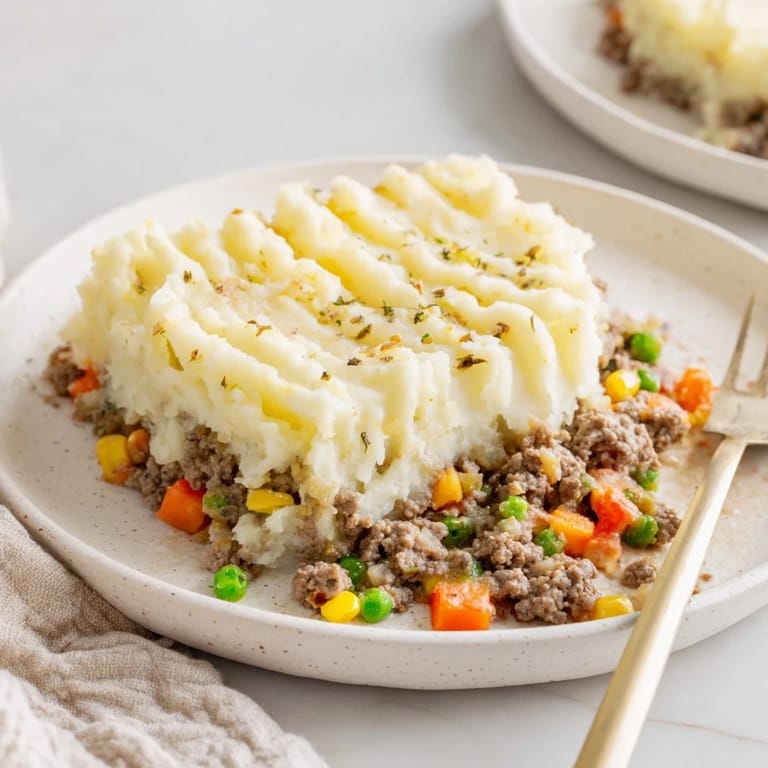
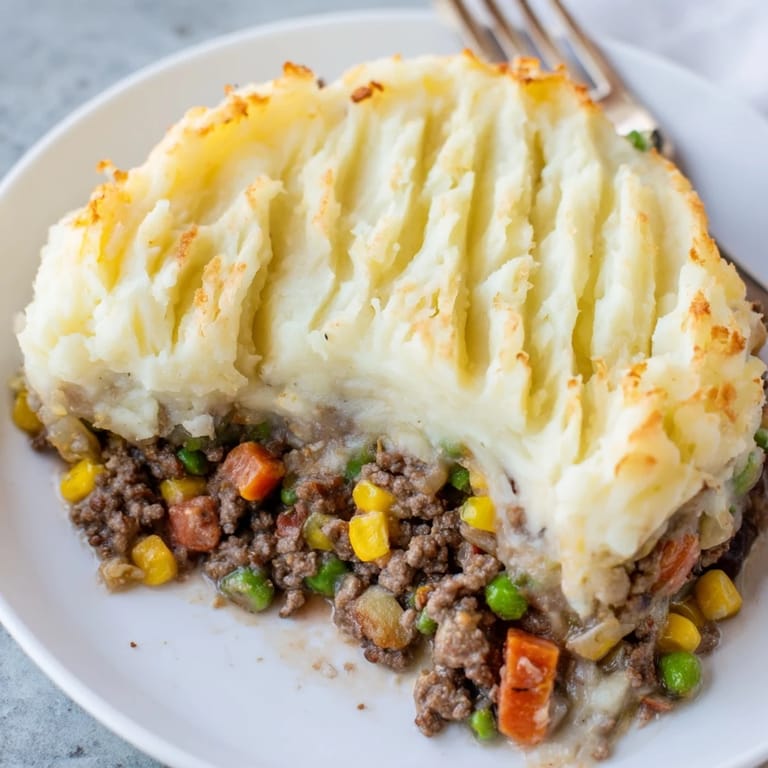
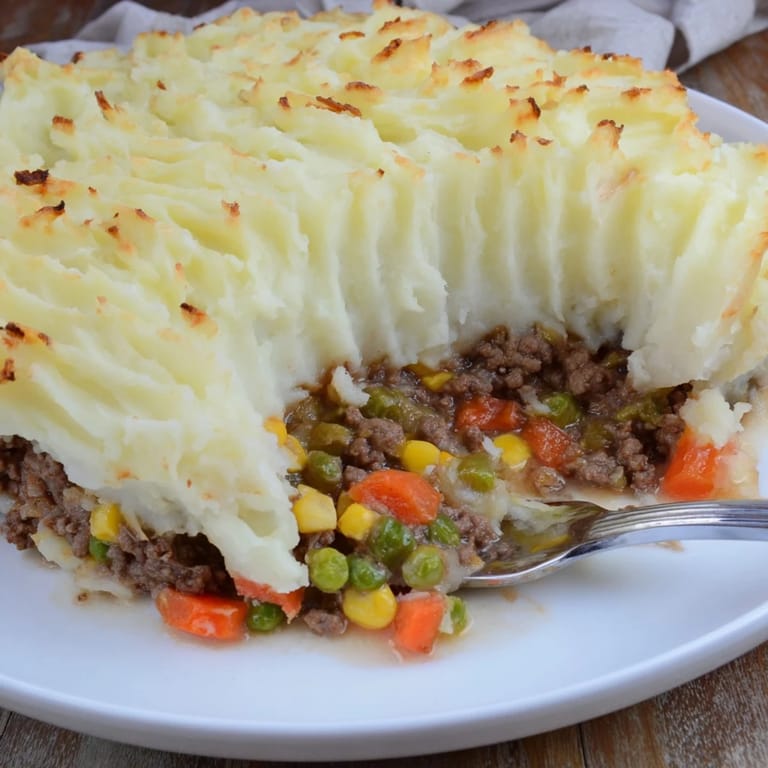
- Spread the meat filling evenly across a 9 by 13-inch baking dish. This step matters because you want every bite to have filling and potato in the same spoonful. Spoon the mashed potatoes over the top and spread them gently with the back of a spoon until it's completely covered. Use a fork to drag lines across the surface, creating little ridges—these ridges will crisp up in the oven and become the best part.
- Bake until golden:
- Pop it into a 400-degree oven for 25 to 30 minutes. You're waiting for the potato topping to turn golden brown and for you to see the filling bubbling slightly at the edges. This is the moment the kitchen smells almost unbearably good.
- Rest before serving:
- Let it sit for 5 to 10 minutes when it comes out of the oven. This isn't just about letting it cool slightly; it gives the filling time to set so it doesn't spill everywhere when you serve it.
 Save
Save The real magic of this dish happened during a family dinner when my niece, who usually picks at her food, asked for thirds and wanted to know what made it taste 'like nothing bad could happen right now.' That's when I realized shepherd's pie isn't really about the ingredients—it's about the reassurance of something warm, familiar, and made with intention.
Why This Dish Endures
Shepherd's pie has been feeding families through hard winters and casual Tuesdays for so long that it's almost transparent in its usefulness. There's no pretense here, no technique that requires years of training. What makes it work is respecting each component—letting the beef brown properly, not overworking the potatoes, building layers of flavor with herbs instead of cream. It's honest food, and honest food rarely disappoints.
Flexibility Without Apology
This is the kind of recipe that invites you to look in your refrigerator and see what you have. Green beans instead of peas? Absolutely. Half beef and half lamb? That's actually brilliant. Parsnips diced into the filling? Now you're cooking. The structure stays the same—meat, vegetables, thickened broth, potato topping—but the details can shift based on what's in your kitchen or what's calling to you that day.
The Little Moments That Matter Most
I've learned to trust the small sensory cues while cooking this. The sound of the meat hitting the hot pan, the aroma when you add the herbs, the way the potatoes feel when they're fork-tender. These moments are how you know you're on track, and they're how cooking becomes less about following steps and more about creating something real. The crispy ridges on top aren't just decoration—they're a reminder that a little attention to detail makes the difference between good food and food that people remember.
- If you don't own a potato ricer, a hand masher works perfectly fine, just don't overwork the potatoes or they'll turn gluey.
- Leftover shepherd's pie reheats beautifully in a 350-degree oven for about 20 minutes, and it often tastes better the next day when the flavors have melded.
- This dish freezes well before or after baking, so you can make it ahead and bake it straight from the freezer with just a few extra minutes in the oven.
 Save
Save Shepherd's pie is the kind of meal that asks very little and gives back generously. Serve it with a simple green salad and maybe a light red wine, and watch how quiet the table becomes.
Recipe Questions & Answers
- → What type of meat works best for this dish?
Ground beef or lamb both create a rich base, and combining the two offers a deeper flavor.
- → Can I substitute the vegetables?
Yes, you can swap peas and corn for green beans or parsnips according to your preference.
- → How can I make the topping extra creamy?
Use plenty of butter and whole milk when mashing the potatoes. Adding shredded cheddar cheese also enhances creaminess.
- → Is there a way to make this gluten-free?
Replace all-purpose flour with cornstarch and use gluten-free broth and sauces to avoid gluten.
- → What temperature and time should it bake?
Bake at 400°F (200°C) for 25–30 minutes until the top is golden and the filling bubbles.