 Save
Save There's something about the smell of butter hitting a hot pan on a lazy Sunday morning that just makes everything feel possible. My roommate in college used to make French toast every weekend, and I'd wake up to that golden, eggy aroma drifting through our dorm and know that breakfast was going to be unexpectedly delicious. I finally asked for her technique one morning, and she laughed, saying the real secret wasn't anything fancy—just patience with the soak and good bread. Now it's become my own weekend ritual, the one dish I make when I want to feel like I'm taking care of the people I'm feeding.
I made this for a friend who'd just broken up with someone, and she sat at my kitchen counter in silence for the first few minutes, then suddenly started laughing about how something so comforting shouldn't be allowed to taste that good. We ate the entire batch without talking much, just passing the maple syrup back and forth, and by the end she felt a little more like herself. That's when I realized French toast isn't really about breakfast—it's about showing up for someone with warmth on a plate.
Ingredients
- Eggs: Four large ones beaten into the custard base, the foundation of everything that makes French toast creamy on the inside instead of just eggy and dense.
- Whole milk: A cup of it carries the custardy flavor, and I learned the hard way that skim milk gives you something closer to bread soup than the real thing.
- Heavy cream: Just two tablespoons, optional but the move if you want it richer and more forgiving—it prevents the eggs from toughening if you cook a touch too long.
- Granulated sugar: A tablespoon sweetens the custard so the bread soaks it up eagerly and caramelizes instead of just turning wet.
- Pure vanilla extract: One teaspoon that makes the whole dish smell like something from a bakery, not a school cafeteria.
- Ground cinnamon: Half a teaspoon, optional but I've never skipped it once I knew what it could do.
- Salt: A tiny pinch that amplifies everything else and keeps the sweetness from becoming one-note.
- Day-old brioche, challah, or thick white bread: Eight slices, and this is non-negotiable—fresh bread falls apart, but bread that's been sitting overnight drinks up the custard like it's been waiting for this moment.
- Unsalted butter: Two tablespoons for the pan, added in stages so it doesn't brown too fast and that golden crust has a chance to form.
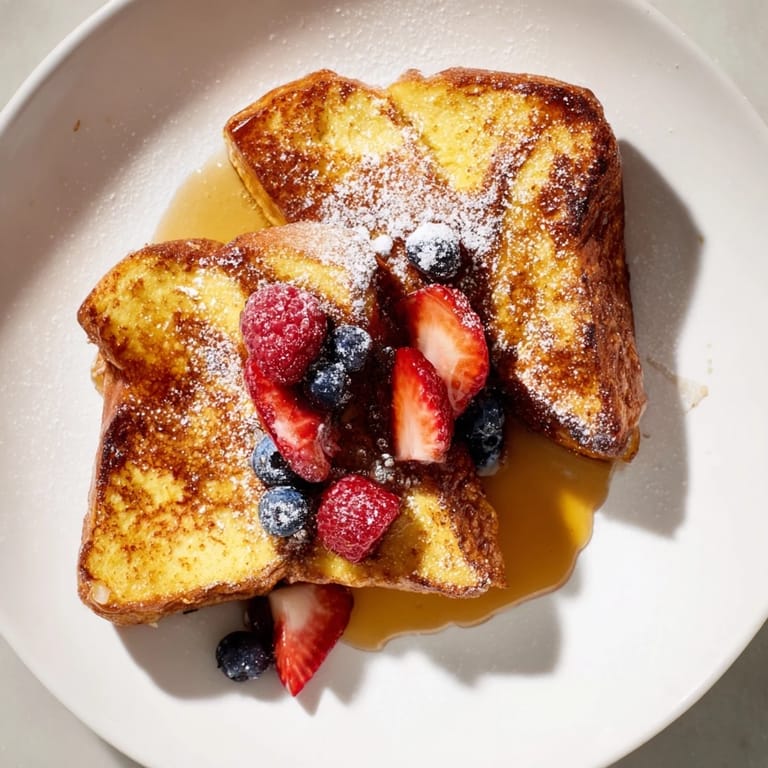
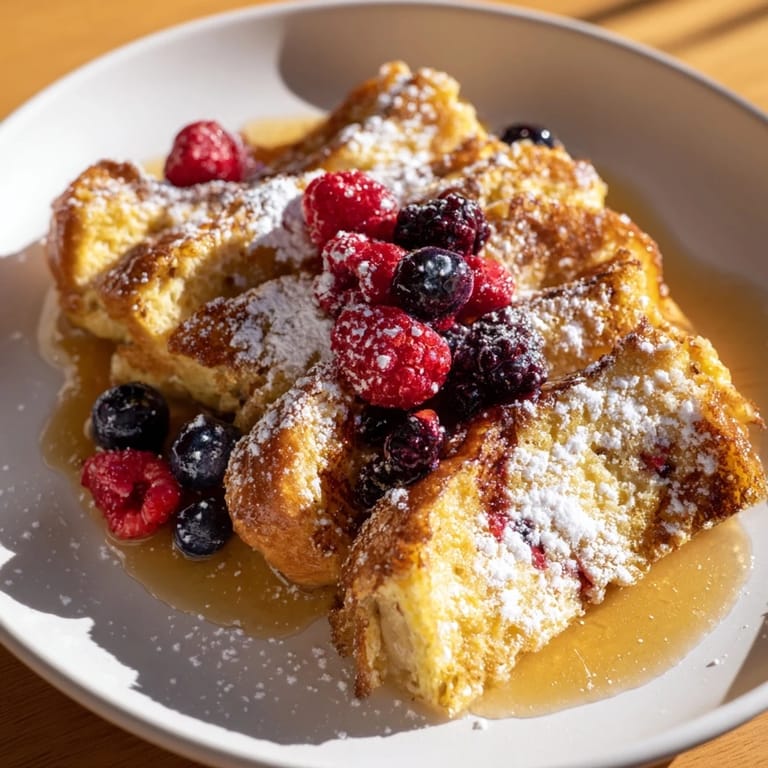
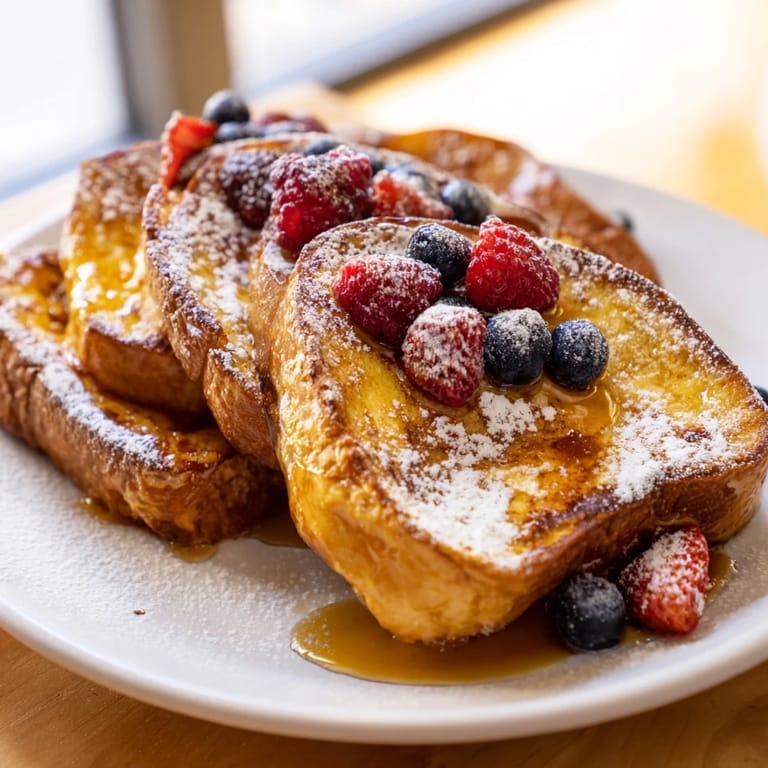
- Maple syrup, powdered sugar, fresh berries: For serving and finishing, the toppings that turn breakfast into something people actually get excited about.
Tired of Takeout? 🥡
Get 10 meals you can make faster than delivery arrives. Seriously.
One email. No spam. Unsubscribe anytime.
Instructions
- Build your custard base:
- Whisk the eggs, milk, heavy cream, sugar, vanilla, cinnamon, and salt together in a large bowl until everything is combined and smooth. The mixture should smell aromatic and feel like you're making something special, not like you're just scrambling eggs.
- Heat your pan properly:
- Set a large non-stick skillet or griddle over medium heat and let it get hot enough that a drop of water sizzles immediately. Add one tablespoon of butter and let it foam and just barely turn golden—you want that nutty aroma, not burnt butter.
- Dip with intention:
- Take each bread slice and let it spend maybe two seconds on each side in the custard, long enough to drink it in but quick enough that it doesn't turn into a soggy mess. You want it soaked through but still holding its shape.
- Cook until golden:
- Place the soaked slices on the hot pan and cook for two to three minutes per side, watching for that deep golden-brown color that means the custard has set and the outside has developed a slight crust. You should hear a gentle sizzle, and the kitchen should smell incredible.
- Keep the heat manageable:
- If the outside is browning too fast before the inside cooks through, lower the heat slightly—medium is your friend here, not high heat that rushes things. Add more butter as you go if the pan starts looking dry.
- Plate and serve warm:
- Transfer each piece to a serving plate as it finishes, and serve them while they're still warm and the custard is still slightly soft in the center. Top with maple syrup, a dusting of powdered sugar, and fresh berries if you have them, and watch people's faces light up.
 Save
Save My sister brought her new partner to breakfast one morning, and I made this without thinking much about it, the way you do when cooking has become automatic. Halfway through eating, he looked up and said this was the best breakfast he'd ever had, and my sister smiled at me like I'd just given her a gift. That's the moment I understood that simple food made with actual care lands differently than anything fancy.
The Bread Question
Choosing the right bread is actually the whole game. Brioche gives you richness and a tender crumb that soaks custard like a dream, challah brings slight sweetness and structure, and thick white bread works perfectly fine if that's what's in your kitchen. I've tried sourdough once thinking the tang would be interesting, and it fought against the custard instead of dancing with it, so stick with something neutral and substantial. The bread is the canvas, not the artist.
Variations That Feel Natural
Once you've made this once, you start seeing doors open. A splash of bourbon or brandy in the custard gives you something deeper that still tastes like breakfast somehow. Orange zest added to the mixture brings unexpected brightness without changing the feel of the dish. Almond extract instead of vanilla takes it in a completely different direction, almost like French toast grew up and got sophisticated. The core technique stays the same, but the flavor story shifts.
Serving It Right
French toast is forgiving enough to make in big batches for a crowd, and it's one of those dishes that somehow tastes better when you're sharing it with someone. Keep the finished pieces warm on a low oven temperature while you finish cooking the rest, so everyone gets hot toast instead of cold toast with hot syrup poured over it. The finishing touches matter more than you'd think—real maple syrup instead of the fake stuff, fresh berries that actually taste like something, a generous dusting of powdered sugar that catches the light.
- Serve immediately and watch how fast people come back for seconds.
- Have extra butter and syrup on the table because people always want more than you expect.
- The best mornings are the ones where someone lingers at the table instead of rushing off.
 Save
Save There's something honest about French toast. It doesn't pretend to be anything other than what it is, and that simplicity is exactly why it works. Make it for people you care about, and let the kitchen fill with that golden, buttery smell that says someone is taking care of breakfast.
Recipe Questions & Answers
- → What type of bread works best?
Day-old brioche, challah, or thick white bread absorb the custard well without falling apart, ensuring a tender yet sturdy texture.
- → Can I make this dairy-free?
Substitute plant-based milk and butter to create a dairy-free version without compromising on richness and flavor.
- → How do I prevent soggy toast?
Soak bread slices briefly in the egg mixture to avoid oversaturation, ensuring a crisp exterior once cooked.
- → What toppings complement this dish?
Maple syrup, powdered sugar, and fresh berries brighten the flavor and add sweetness and freshness.
- → Any tips to enhance flavor?
Adding orange zest or a splash of liqueur to the egg mixture adds depth and a subtle aromatic twist.