 Save
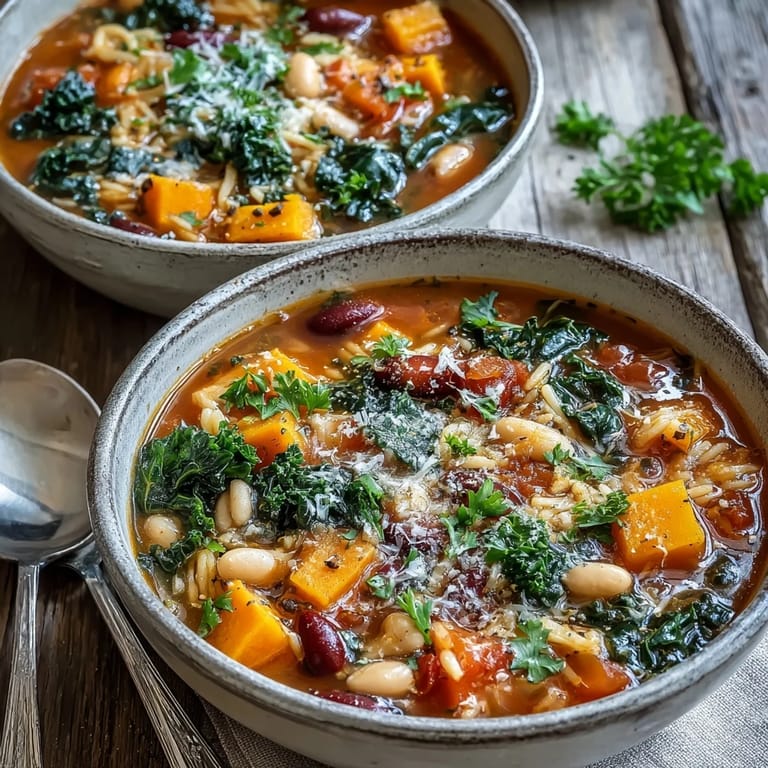
Save There's something about the first real cold snap of winter that makes me want to fill my kitchen with steam and warmth, and this minestrone has become my go-to ritual. My neighbor Maria once brought over a pot of her family's version, and I spent the whole evening asking questions between spoonfuls—why the butternut squash, how long to let it simmer, whether the kale goes in last. She smiled and said the real secret was cooking it when you needed comfort most, not just when you were hungry.
I made this soup for my sister on a November evening when she called saying she'd had the worst day, and by the time she arrived, the whole house smelled like autumn spices and roasted squash. She sat at my kitchen counter with a steaming bowl, didn't say much at first, and then quietly asked for the recipe. That's when I knew it had become something special.
Ingredients
- Olive oil: Use a good quality one you actually like the taste of, not the bottle that's been lurking in the back since 2019.
- Yellow onion, carrots, and celery: This trio is the foundation of Italian cooking, and there's a reason—they build a flavor base that makes everything taste more like itself.
- Garlic cloves: Minced fresh garlic makes a real difference here; jarred garlic will make your kitchen smell like a gym.
- Butternut squash: The sweetness balances the tomato and herbs, and if you can find one that's already cut, no judgment from me.
- Zucchini: A summer vegetable in a winter soup, but it adds texture and doesn't overshadow the other flavors.
- Fresh kale: Remove those tough stems or they'll be chewy little reminders of your impatience—learned that one the hard way.
- Canned diced tomatoes: Winter tomatoes in a can are honestly better than winter tomatoes from the store, and I say that as someone who loves fresh tomatoes.
- Cannellini beans: Creamy and mild, they add protein without demanding attention.
- Small pasta (ditalini or elbow macaroni): The tiny shapes get suspended throughout the soup instead of sinking to the bottom, which matters more than you'd think.
- Vegetable broth: Taste it before you buy it; some brands taste like sadness in a carton.
- Dried oregano, thyme, and rosemary: This combination is unmistakably Italian, and the dried herbs actually work better here than fresh because they infuse the broth more slowly.
- Red pepper flakes: Optional, but a pinch adds a whisper of heat that wakes up your mouth.
- Fresh parsley: Added at the very end so it stays bright and doesn't become invisible.
- Parmesan cheese: Grated fresh over each bowl lets people choose their own amount, which is more generous than stirring it in.
Tired of Takeout? 🥡
Get 10 meals you can make faster than delivery arrives. Seriously.
One email. No spam. Unsubscribe anytime.
Instructions
- Build your flavor base:
- Heat olive oil in your pot and add the onion, carrots, and celery together—they should sizzle immediately and fill your kitchen with that classic savory smell. Let them soften for 5 to 6 minutes, stirring now and then so nothing sticks.
- Wake up the garlic:
- Stir in your minced garlic and let it cook for just 1 minute until it's fragrant and slightly golden. Don't let it brown or it'll turn bitter and ruin the whole moment.
- Add the sweet vegetables:
- Drop in your butternut squash and zucchini pieces, stirring occasionally for about 4 to 5 minutes so they start to release their flavors into the oil. They won't be cooked through yet—that happens in the broth.
- Pour in the broth and tomatoes:
- Add your diced tomatoes with their juice, then the vegetable broth and water, and stir to combine. Bring everything to a boil, then turn the heat down.
- Season and simmer:
- Stir in your oregano, thyme, rosemary, and a pinch of red pepper flakes if you're using them, then reduce the heat and let it simmer gently for 15 minutes. This is when the soup starts to taste like soup instead of just hot vegetables.
- Add beans and pasta:
- Stir in your drained cannellini beans and pasta, then simmer for another 8 to 10 minutes until the pasta is tender but not mushy and the butternut squash is soft when you press it with your spoon. This is the waiting part where you might taste it three times to make sure it's happening.
- Finish with the greens:
- Stir in your chopped kale and let it cook for 2 to 3 minutes until it's dark and silky. Taste it now and adjust the salt and pepper until it tastes like the version in your head.
- Final flourish:
- Turn off the heat and stir in your fresh parsley so it stays bright green. Ladle into bowls and let everyone add their own Parmesan if they want it.
 Save
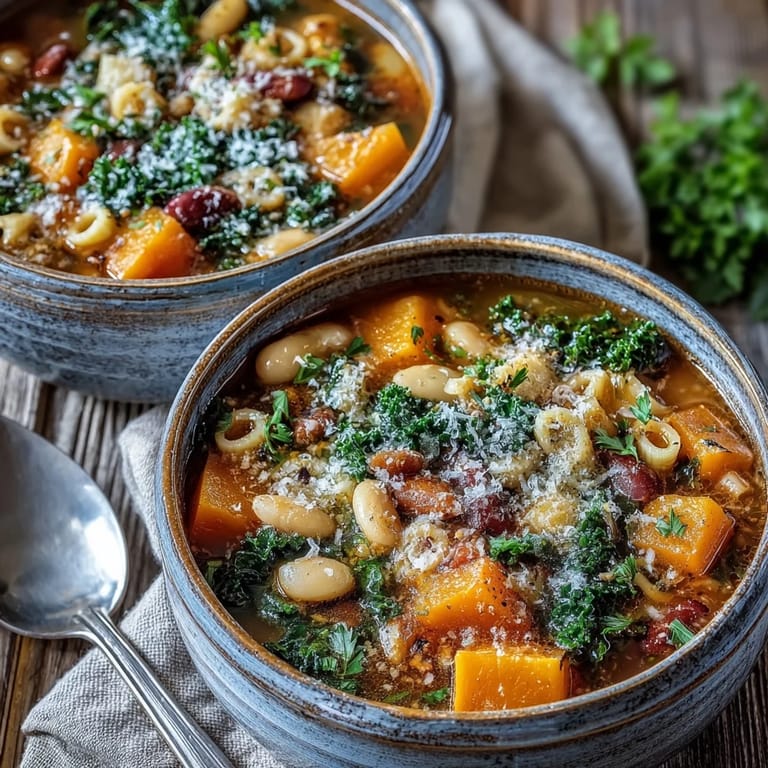
Save This soup has a way of making people linger at your table longer than they planned, asking for seconds and telling you they're going to make it at home. There's something about a bowl of minestrone that turns an ordinary Tuesday into a moment worth remembering.
The Story Behind Winter Minestrone
Minestrone means 'big soup' in Italian, and it was born out of practical cooking—a way to use whatever was in the garden or root cellar before winter ran out of it. What started as peasant food became something people crave, which tells you something about honest, simple cooking. Every Italian region has its own version, and this one is mine because it's the one that makes my home smell like comfort.
Why Butternut Squash Changes Everything
The first time I made minestrone without butternut squash, I realized midway through that I'd made a mistake. The soup needed that sweet earthiness to balance the acidity of the tomatoes and the bitterness of the kale—without it, everything felt like it was fighting for attention. Now I always make sure the squash is cut into small enough pieces so it softens in the same amount of time as everything else, creating this natural sweetness that rounds out all the other flavors.
Making It Your Own
The beauty of minestrone is that it's forgiving and flexible, a soup that trusts you to make good choices. I've added spinach instead of kale when that's what I had, swapped in kidney beans for cannellini, and once even added a splash of red wine when the soup needed something more. The version you make will be better than mine because it will taste like your kitchen, your preferences, your Friday night.
- For a vegan version, skip the Parmesan or use a dairy-free alternative that melts into the hot soup nicely.
- If you have a Parmesan rind hiding in your freezer, add it while the soup simmers for extra depth, then fish it out before serving.
- Pair this with crusty bread and a crisp white wine like Pinot Grigio, or just eat it with a book and no other plans.
 Save
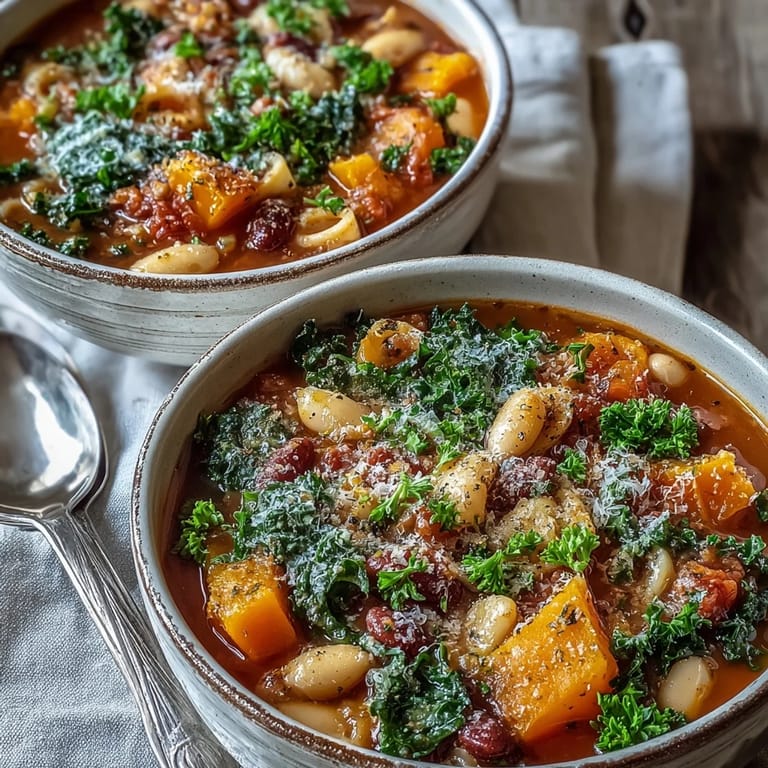
Save Winter minestrone is the kind of soup that becomes part of your routine, the one you make without really thinking about it because your hands know the way. Every time you make it, it tastes like home.
Recipe Questions & Answers
- → Can I make this soup ahead of time?
Yes, this minestrone tastes even better the next day as flavors meld. Store in an airtight container in the refrigerator for up to 4 days. Note that pasta will absorb liquid over time, so you may need to add extra broth when reheating.
- → What can I substitute for butternut squash?
Sweet potato, acorn squash, or pumpkin work wonderfully as alternatives. Dice them to similar sizes for even cooking. Each brings a slightly different sweetness and texture to the soup.
- → How do I make this soup gluten-free?
Simply replace the regular pasta with your favorite gluten-free pasta variety. Rice-based or chickpea pasta work particularly well. Cook according to package directions as gluten-free pasta may have different timing.
- → Can I freeze leftover minestrone?
Yes, but for best results, freeze the soup before adding pasta. Cook pasta fresh when reheating. The soup freezes well for up to 3 months. Thaw overnight in the refrigerator and reheat gently on the stovetop.
- → What type of kale works best?
Lacinato kale (dinosaur kale) is ideal for its tender texture, but curly kale works well too. Remove tough stems and chop leaves into bite-sized pieces. Baby kale is another excellent option and requires less prep.
- → How can I add more protein to this soup?
Add cooked Italian sausage, diced chicken, or extra beans for additional protein. White beans, chickpeas, or lentils complement the flavors beautifully while maintaining the Italian character of the dish.