 Save
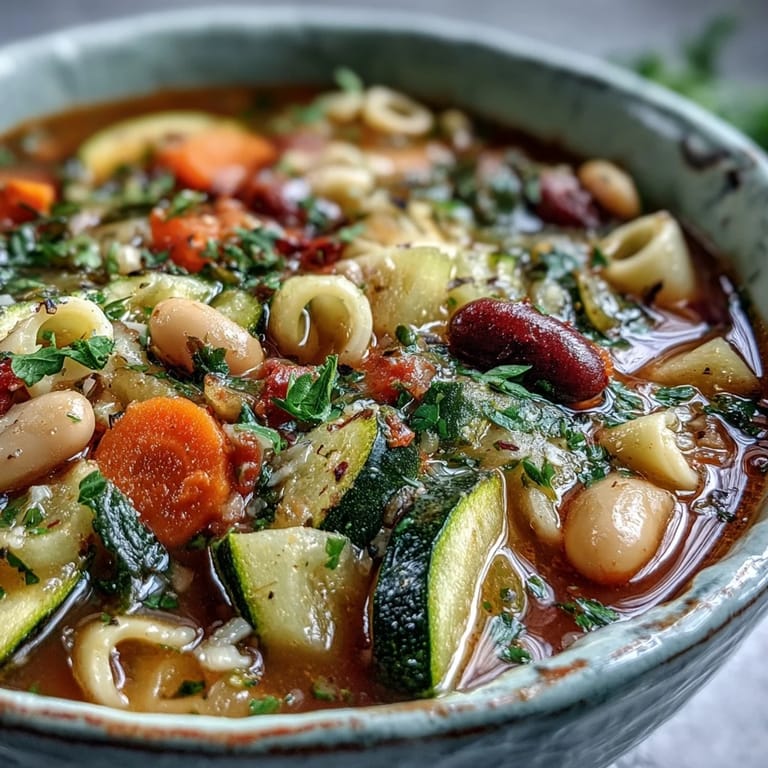
Save My neighbor Maria handed me a steaming bowl of minestrone on a gray October afternoon, and I watched the way the pasta caught the light as it settled against the beans. She didn't call it a recipe, just a way to use what the garden had left before the first frost. That soup tasted like relief, like someone saying it's okay to keep things simple. Years later, I make it myself on days when the kitchen feels cold and quiet, and somehow it fills more than just the bowl.
I made this for my sister's book club once, doubling the batch because I wasn't sure how much soup five people could actually eat. They came back for thirds, asking about the secret ingredient that didn't exist, just time and attention and the smell of basil hitting hot tomato. By the end of the evening, the pot was nearly empty and everyone was quiet in that satisfied way you get after real food and real conversation.
Ingredients
- Olive oil: Use good quality if you have it, though any will work—it's your foundation for coaxing sweetness from the aromatics.
- Onion, celery, and carrots: This holy trinity builds flavor from the ground up, so don't rush the sauté or skip any of them.
- Garlic: Two cloves is enough to whisper, not shout—you want to taste the vegetables, too.
- Zucchini: Summer or winter squash both work; this adds body without heaviness.
- Green beans: Fresh or frozen, they keep their snap and remind you that vegetables matter.
- Baby spinach or kale: Wilts at the last moment, adding color and iron without bitterness.
- Diced tomatoes: Canned is perfectly fine and often better than watery fresh ones in winter.
- Tomato paste: Two tablespoons concentrate the flavor and give the broth a deeper color.
- Vegetable broth: The soul of the soup—taste yours first, as some brands run salty.
- Small pasta: Ditalini or elbow pasta fits on the spoon and distributes evenly throughout.
- Cannellini or kidney beans: Rinse them well to remove the starchy liquid that clouds the broth.
- Oregano, basil, and thyme: Dried herbs work beautifully here; they've had time to develop their character.
- Bay leaf: Remove it before serving—it's a guide, not an ingredient.
- Fresh parsley: Stirred in at the end and sprinkled on top, it brightens everything.
Tired of Takeout? 🥡
Get 10 meals you can make faster than delivery arrives. Seriously.
One email. No spam. Unsubscribe anytime.
Instructions
- Build your base:
- Heat olive oil in a large pot over medium heat, then add onion, celery, and carrots. Let them soften for about five minutes, stirring occasionally—you're looking for the moment when the kitchen smells sweet and the vegetables have turned translucent at the edges.
- Deepen the flavor:
- Stir in garlic, zucchini, and green beans, cooking for three to four minutes until the garlic becomes fragrant and loses its raw edge. This is when you know everything is moving in the right direction.
- Build the broth:
- Add diced tomatoes, tomato paste, vegetable broth, oregano, basil, thyme, and bay leaf, then bring the pot to a boil. Once it's bubbling, reduce the heat and let it simmer gently for fifteen minutes while the flavors meld together.
- Add the pasta and beans:
- Stir in the pasta and beans, cooking for about ten minutes until the pasta is tender but still has a slight resistance when you bite it. Taste a piece—al dente means it won't turn to mush by the time you ladle it into a bowl.
- Finish with green:
- Add the spinach or kale and fresh parsley, letting them wilt into the hot broth for two to three minutes until they've surrendered their color and body to the soup. The whole pot will smell like something you want to wrap your hands around.
- Season and serve:
- Fish out the bay leaf with a spoon, then taste the soup and add salt and pepper until it tastes like comfort. Ladle into bowls, scatter extra parsley on top, and serve while it's still steaming.
 Save
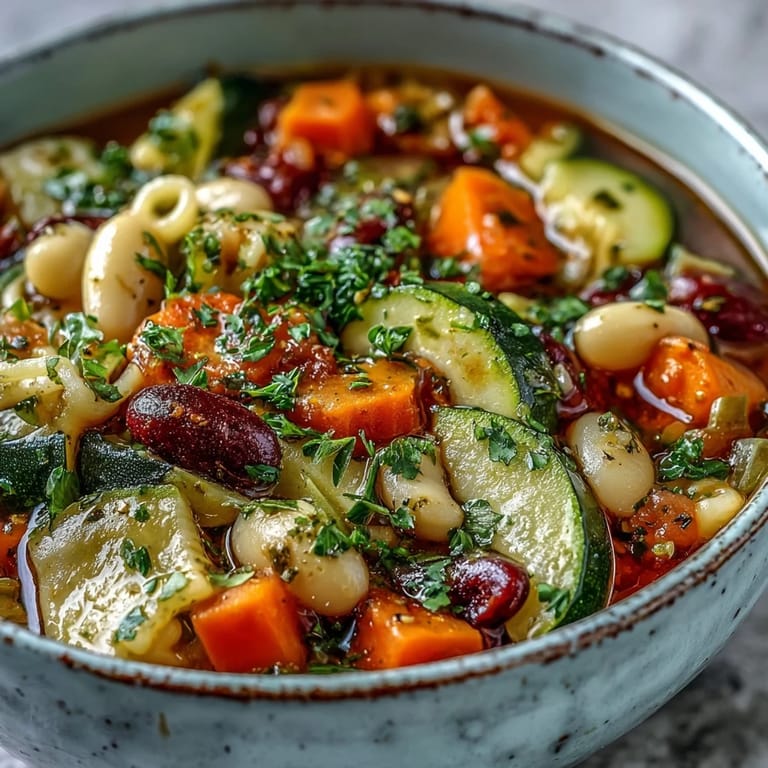
Save My daughter asked why we weren't adding meat, and I realized in that moment that she'd never questioned whether a soup could be hearty without it. That bowl in front of her, thick with beans and vegetables and pasta, had already proven the answer. Food can be a conversation, too.
Why This Soup Never Gets Boring
The beauty of minestrone is how it responds to what's in your kitchen. Last week I added half a fennel bulb I found at the back of the crisper drawer, and the whole soup took on a subtle sweetness that caught everyone off guard. Next time, you might throw in diced bell pepper, fresh green peas, or even a handful of mushrooms. The herbs and broth are patient enough to welcome almost anything, and the pasta and beans anchor it all so nothing gets lost.
Timing and Temperature
This soup comes together in about fifty minutes from cold pot to table, which means you can start it while the afternoon is still young. The simmering isn't passive time—it's when you can chop bread, set the table, or just stand at the stove and let the steam from the pot rise up and warm your face. That quiet time matters as much as the cooking itself, and the soup seems to know it.
What Makes It Complete
Minestrone wants company—crusty bread to break apart and dunk, a scatter of Parmesan if you're not vegetarian, maybe a glass of something light to sip between spoonfuls. The soup is ready to eat as soon as it's done, but it actually improves if you let it sit for an hour and reheat it gently, because then the flavors have had time to get to know each other. Every ingredient in this pot is meant to make the others better.
- Serve with thick slices of bread that can stand up to being dipped and soaked.
- A squeeze of fresh lemon juice right before eating brightens the whole bowl.
- Leftover soup keeps for four days in the refrigerator and freezes beautifully for up to three months.
 Save
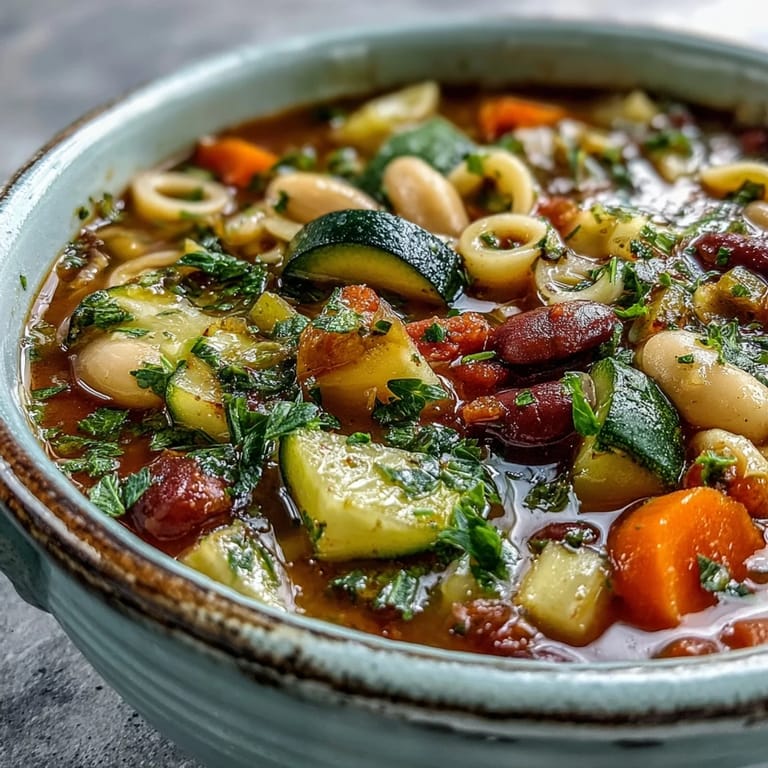
Save Make this soup when you need something that tastes like someone cares. It always remembers who you are.
Recipe Questions & Answers
- → Can I use different types of pasta for minestrone?
Yes, any small pasta shape works well. Ditalini, elbow macaroni, small shells, or orzo are excellent choices. For gluten-free versions, substitute with gluten-free pasta varieties.
- → What vegetables can I substitute in minestrone?
Minestrone is very flexible. Try adding bell peppers, cabbage, potatoes, peas, or whatever seasonal vegetables you have available. The key is maintaining a good variety of textures and colors.
- → How do I store leftover minestrone soup?
Store in an airtight container in the refrigerator for up to 4 days. The pasta will absorb liquid over time, so add extra broth when reheating. Freezing is possible but best done before adding pasta.
- → Can I make minestrone soup ahead of time?
Absolutely. Prepare the soup base with vegetables and broth up to 2 days ahead. Add pasta and beans when reheating to prevent overcooking and maintain the best texture.
- → What makes minestrone different from other vegetable soups?
Minestrone is distinguished by its Italian origin and the combination of pasta or rice, beans, tomatoes, and a variety of seasonal vegetables in a flavorful herb-infused broth.
- → How can I make this minestrone soup vegan?
This version is already vegetarian. To make it vegan, simply skip the Parmesan garnish or use a plant-based alternative. Ensure your vegetable broth and pasta are vegan-certified.