 Save
Save My neighbor Maria handed me a steaming bowl of minestrone one cold November afternoon, and I haven't stopped making it since. The way the pasta curled into the tomato broth, how the beans softened into the background while keeping their shape, the sheer simplicity of it all—it felt like she'd passed along something more valuable than a recipe. Years later, I realized what made it special wasn't any single ingredient but the generosity baked into every spoonful, the idea that you use what you have and it somehow becomes exactly what you need.
I made this for my book club one rainy Thursday, and five people asked for the recipe before dessert arrived. One guest mentioned it reminded her of her grandmother's kitchen in Rome, another said it was the first hot soup that didn't bore her, and someone else admitted she'd never cooked with fresh thyme before but now she understood what the fuss was about. That night taught me that minestrone is less about perfection and more about creating a moment where people feel looked after.
Ingredients
- Olive oil (2 tablespoons): This is your foundation, so use the good stuff you actually enjoy tasting rather than what's cheapest.
- Onion, carrots, and celery (1 each): This holy trio creates the backbone of flavor that makes everything taste intentional and rounded.
- Garlic (2 cloves): Mince it fine so it dissolves into the broth rather than turning into tough little chips.
- Zucchini and green beans (1 medium zucchini, 1 cup green beans): These stay tender without turning mushy if you don't overcook them, which is why timing matters here.
- Spinach or kale (2 cups): Add this right at the end so it wilts without losing its bright color and character.
- Diced tomatoes (1 can, 14 oz): The acidity brightens everything, so don't skip them for fresh tomatoes unless you know what you're doing.
- Vegetable broth (6 cups): Taste yours before you buy it because some broths are too salty and will overpower the soup.
- Oregano, basil, thyme, and bay leaf: Dried herbs work beautifully here because they soften into the broth and become part of the whole rather than sharp notes.
- Cannellini and kidney beans (1 can each, 15 oz): Always rinse them under cold water to remove that starchy liquid that makes soup cloudy and dull.
- Small pasta like ditalini or elbow (3/4 cup): Small shapes work best because they tuck into each spoonful instead of making you hunt for them.
- Parmesan, parsley, and extra virgin olive oil (for serving): These final touches feel like small luxuries but they're what make someone go back for seconds.
Tired of Takeout? 🥡
Get 10 meals you can make faster than delivery arrives. Seriously.
One email. No spam. Unsubscribe anytime.
Instructions
- Build your flavor base:
- Heat the olive oil in your largest pot over medium heat and add the diced onion, carrots, and celery together. Let them soften for five to six minutes, stirring occasionally, until the onion turns translucent and the kitchen starts smelling like something good is happening. You'll know you're there when you pause and actually notice the aroma instead of just seeing steam.
- Layer in more vegetables:
- Stir in the minced garlic, diced zucchini, and chopped green beans, then cook for three or four minutes. This is when the smell changes again, becoming brighter and more alive, and that's your signal that you're building something with real depth.
- Bring in the tomatoes and broth:
- Pour in the diced tomatoes with their juice and the vegetable broth, then add the oregano, basil, thyme, and bay leaf along with a generous pinch of salt and pepper. Stir everything together, bring it to a boil, then reduce the heat to a gentle simmer, cover the pot, and let it cook for fifteen minutes. This is where you can step back and do something else because the soup is doing the heavy lifting now.
- Add pasta and beans:
- Uncover the pot and stir in the pasta and both drained cans of beans, then simmer uncovered for ten to twelve minutes until the pasta reaches that perfect al dente texture. Stir it every few minutes so nothing sticks to the bottom and the pasta cooks evenly.
- Finish with greens:
- Add the spinach or kale and cook for just two to three minutes until it softens and darkens. Remove the bay leaf now, then taste the soup and adjust the salt, pepper, or seasonings until it tastes like exactly what you wanted.
- Serve with intention:
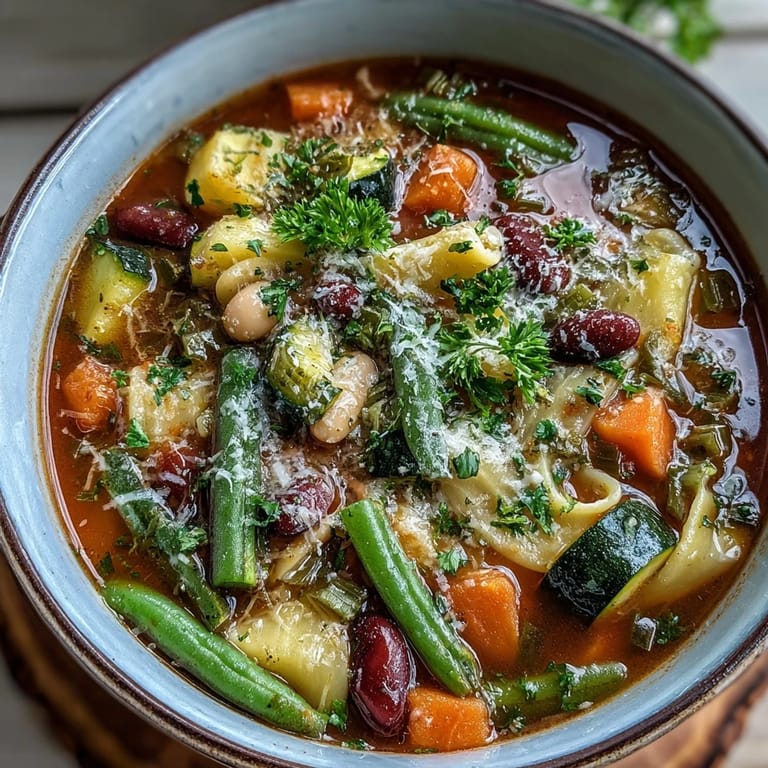
- Ladle the soup into bowls and let people finish it themselves with Parmesan, fresh parsley, and a swirl of your best olive oil. The act of garnishing makes everyone feel like they're part of something special, which they are.
 Save
Save My son came home from school upset about something he wouldn't explain, so I quietly made this soup without asking questions. By the second bowl, he started talking again, and I realized minestrone has this magic quality of creating space for people to open up. Sometimes the most powerful thing food can do is sit quietly beside someone until they're ready.
When to Make This Soup
Minestrone works year-round because you can swap vegetables with what's actually in season and actually good. In summer, I add extra zucchini and fresh basil stirred in at the very end, while in winter I throw in diced potatoes or a handful of kale and let it get heartier. The soup teaches you to listen to what's available rather than fighting for what isn't, which is a good lesson that extends beyond cooking.
Storage and Reheating
Keep leftover minestrone in the refrigerator for up to four days, and it genuinely tastes better on day two once everything has settled into knowing each other. When you reheat it, add a splash of fresh broth or water because the pasta absorbs liquid overnight, and the soup will taste thin if you don't replenish it. Frozen soup keeps for three months and thaws beautifully, though I usually eat it faster than that.
Making It Your Own
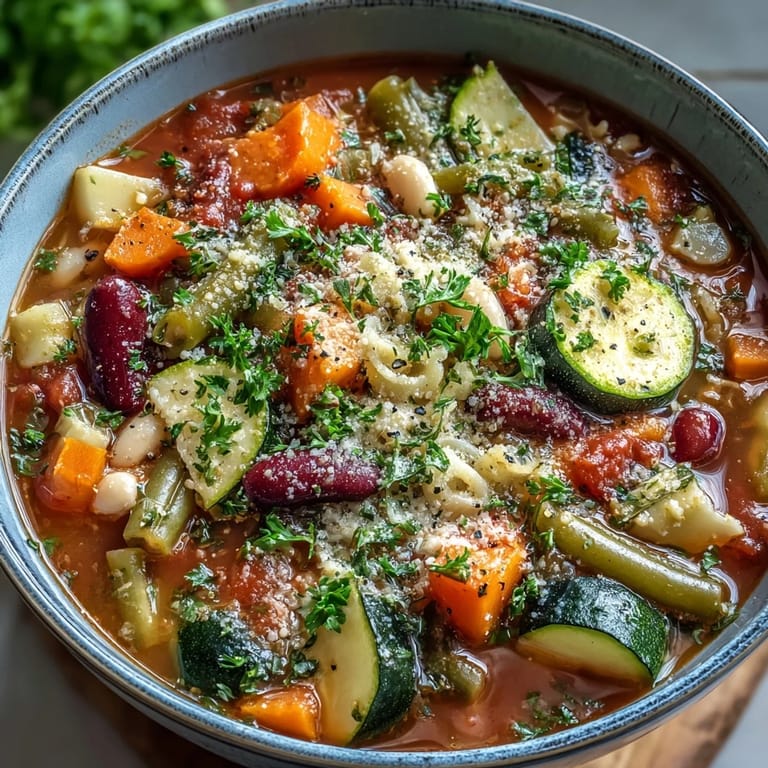
This is the kind of soup that invites you to be creative without requiring it. Some people add a splash of balsamic vinegar at the end, others stir in a spoonful of pesto right before serving, and one friend of mine adds white beans instead of red because that's what she has on hand. The recipe is flexible enough to bend to your tastes and your pantry, which is exactly how it should be.
- Try adding a Parmesan rind while the soup simmers—it adds an umami depth that seems impossible until you taste it.
- Stir in a drizzle of good olive oil right before serving for richness that makes people notice the difference.
- If you're cooking for someone vegetarian, double-check your broth label because some brands sneak in fish-based ingredients.
 Save
Save Make this soup when you want something that tastes like someone cares, because that's exactly what it is. It's the kind of dish that turns an ordinary day into something warm and whole.
Recipe Questions & Answers
- → Can I make minestrone soup ahead of time?
Yes, minestrone soup actually tastes better the next day as the flavors develop. Store it in an airtight container in the refrigerator for up to 4 days. Add a splash of broth when reheating as the pasta absorbs liquid.
- → What vegetables can I substitute in minestrone?
Minestrone is very flexible. You can add potatoes, cabbage, peas, bell peppers, or any seasonal vegetables you have on hand. Just maintain similar cooking times by adding harder vegetables earlier and tender greens at the end.
- → How do I make this minestrone vegan?
Simply omit the Parmesan cheese garnish or use a plant-based alternative. The soup itself is already vegetarian and uses vegetable broth, so this is the only modification needed for a completely vegan dish.
- → Can I use a different type of pasta?
Absolutely. Small pasta shapes work best such as ditalini, elbow macaroni, small shells, or orzo. For a gluten-free version, substitute with your favorite gluten-free pasta and follow the same cooking instructions.
- → What can I serve with minestrone soup?
Minestrone pairs beautifully with crusty Italian bread, focaccia, or garlic bread for dipping. For beverages, a light red wine like Chianti complements the tomato broth perfectly, or serve with sparkling water and lemon.
- → How can I make the soup thicker or thinner?
To thicken the soup, mash some of the beans against the pot or add less broth. For a thinner consistency, simply add more vegetable broth or water. You can also adjust the pasta quantity to change the overall texture.