 Save
Save The first time I made jambalaya, I was standing in my kitchen on a grey Sunday afternoon, phone propped against the spice rack with a video playing. My grandmother's voice came through describing how the Holy Trinity of onion, celery, and bell pepper forms the soul of any proper Creole dish, and I realized I'd been rushing past those foundational flavors my whole life. That afternoon, watching the sausage sizzle and the spices bloom, something clicked—this wasn't just a recipe, it was a conversation across generations about what it means to build flavor deliberately.
I made this for friends on a Friday night when everyone was tired and hungry, and watching them slow down between bites—actually pausing to taste—told me everything. One friend asked if this was how it tasted in New Orleans, and honestly, I don't know, but in that moment it tasted like home, like we'd all traveled somewhere just by sitting at the table together.
Ingredients
- Andouille sausage: This smoky, spiced sausage is the backbone that makes jambalaya taste authentic—don't skip it or swap it carelessly, as its smokiness can't really be replaced, though kielbasa works if you're in a pinch.
- Chicken thighs: Dark meat stays juicy and tender through simmering, unlike breast meat which can dry out; don't bother with the healthier option here.
- Large shrimp: They cook fast, so adding them at the end keeps them tender instead of turning into little rubber bullets.
- Onion, bell pepper, celery: These three create the flavor base called the Holy Trinity in Creole cooking, and sweating them down properly is where magic starts.
- Garlic: Added after the softer vegetables so it doesn't burn and turn bitter while waiting for everything else to cook down.
- Diced tomatoes: The acid balances all that richness and adds brightness; canned is perfect here because you want the juices too.
- Long-grain white rice: It should stay separate and fluffy, not mushy; rinsing removes excess starch that would make it gluey.
- Chicken broth: This is your liquid base, and it needs to be flavorful on its own since it becomes the essence of the dish.
- Smoked paprika, thyme, oregano, cayenne: These spices work together to create that warm, complex Cajun heat—not just hot, but layered and interesting.
Tired of Takeout? 🥡
Get 10 meals you can make faster than delivery arrives. Seriously.
One email. No spam. Unsubscribe anytime.
Instructions
- Brown the sausage first:
- Slice the andouille and let it hit hot oil until the edges caramelize slightly, about 3 to 4 minutes. This renders the fat and builds a flavorful foundation for everything else.
- Sear the chicken:
- Pat the chicken pieces dry, season them, then brown them on all sides until golden—this takes about 4 to 5 minutes and adds color and depth. Don't rush it or crowd the pot.
- Build the flavor base:
- Toss in the onion, bell pepper, and celery, stirring them around until they soften and release their sweetness, roughly 5 minutes. Add garlic at the very end of this step so it doesn't scorch.
- Toast the spices:
- Stir the rice and all the spices together for about a minute—you'll smell them wake up, and that's exactly what you want. This blooming process makes the spices taste deeper and more intentional.
- Build the pot:
- Pour in the tomatoes with their juices and the chicken broth, stirring well to lift any brown bits stuck to the bottom. These bits are flavor gold, so don't skip the scraping.
- Simmer with sausage and chicken:
- Return the meat to the pot along with bay leaves, bring it to a boil, then drop the heat to low and cover. Let it simmer gently for 20 minutes, stirring once halfway through so nothing sticks to the bottom.
- Finish with shrimp:
- Nestle the raw shrimp right into the rice, cover again, and cook for 5 to 7 minutes until the shrimp turn pink and the rice is tender. The residual heat cooks the shrimp perfectly without overdoing it.
- Rest and fluff:
- Take it off heat, pull out the bay leaves, and use a fork to gently fluff the rice, lifting it up so it separates instead of compacting into a block.
 Save
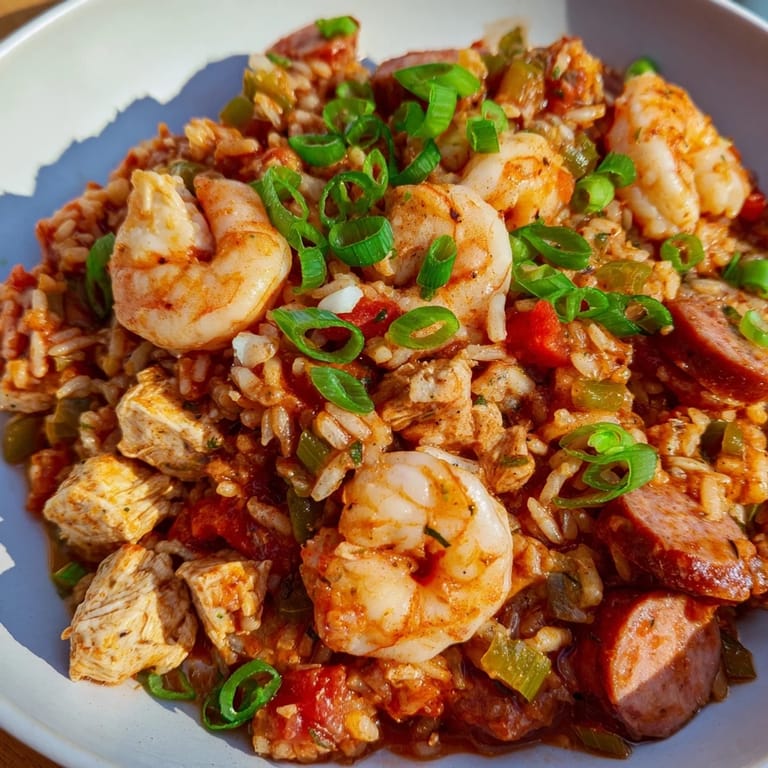
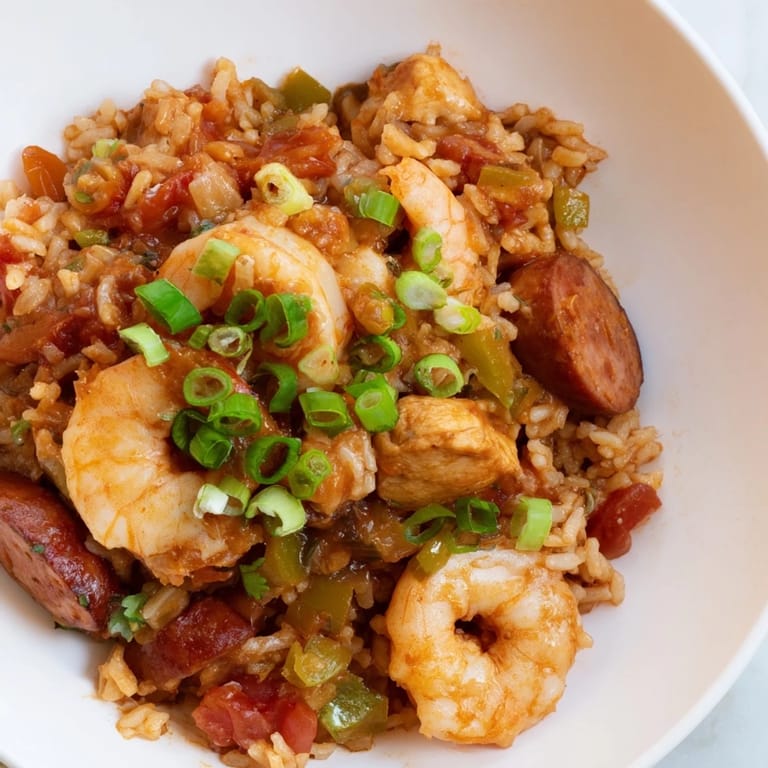
Save There's a moment, right when the shrimp turn pink and you lift the lid and see all three proteins nestled into the rice with wisps of steam rising, where you know this is going to be good. That's when I usually call whoever's in the next room and say, we're eating in five minutes.
Customizing Your Jambalaya
Jambalaya is one of those dishes that invites improvisation without breaking. If you want it hotter, add diced jalapeños with the softer vegetables or increase the cayenne—start conservatively because you can always add more heat but you can't take it back. For a spice-averse crowd, drop the cayenne to a quarter teaspoon and skip the hot sauce garnish. If shrimp isn't your thing or you're cooking for someone with shellfish allergies, just leave it out and let the sausage and chicken do the work; the dish is complete without it.
Why This Works as One Pot
Cooking everything together means the proteins flavor the rice as they release their juices, and the rice absorbs all those flavors instead of them washing away in separate pots. The sausage and chicken brown in that first stage, building a fond that dissolves into the liquid and carries that caramelized depth into every bite. The vegetables soften slowly and sweeten, and by the time the shrimp arrives everything is singing together.
Serving and Pairing
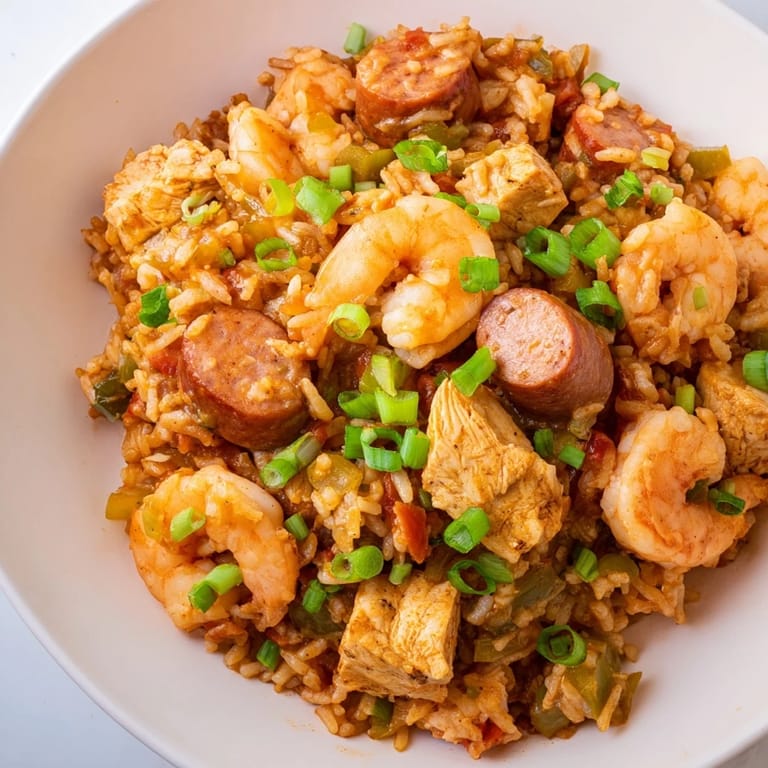
Jambalaya is rich and complete on its own, but cornbread is the obvious partner—the slight sweetness and crumbly texture play beautifully against the Cajun spices. A simple green salad with vinaigrette cuts through the richness if you want something lighter alongside it. Serve hot, with hot sauce on the table for people who want more fire, and always finish with fresh spring onions and parsley because they add a final brightness that rounds everything out.
- If you make this ahead, it actually tastes better the next day as the flavors continue settling together.
- Leftover jambalaya reheats gently on the stove with a splash of broth to restore moisture.
- This recipe serves 6 easily, and it scales up well if you're feeding a crowd.
 Save
Save Jambalaya teaches you that the best meals come from building flavor deliberately, layer by layer, and trusting that everything will come together. Make this on a night when you want something that tastes like care and effort but doesn't demand either one.
Recipe Questions & Answers
- → What type of sausage is best for this dish?
Andouille sausage is ideal for its smoky, spicy profile, but smoked kielbasa or chorizo work well as alternatives.
- → Can I adjust the spice level?
Yes, increase or decrease cayenne pepper to taste, or add diced jalapeños for extra heat.
- → How do I know when the shrimp is cooked?
Shrimp should turn pink and opaque, usually after 5–7 minutes of simmering, indicating doneness.
- → Is it necessary to brown the meats first?
Browning adds depth and rich flavor by caramelizing the proteins before simmering with other ingredients.
- → What can I serve alongside this dish?
It pairs well with cornbread, green salads, or steamed greens for a complete meal experience.